.svg)





It’s 2026. Every website has cookies. So that means every website has a compliant, accurate cookie policy, right?
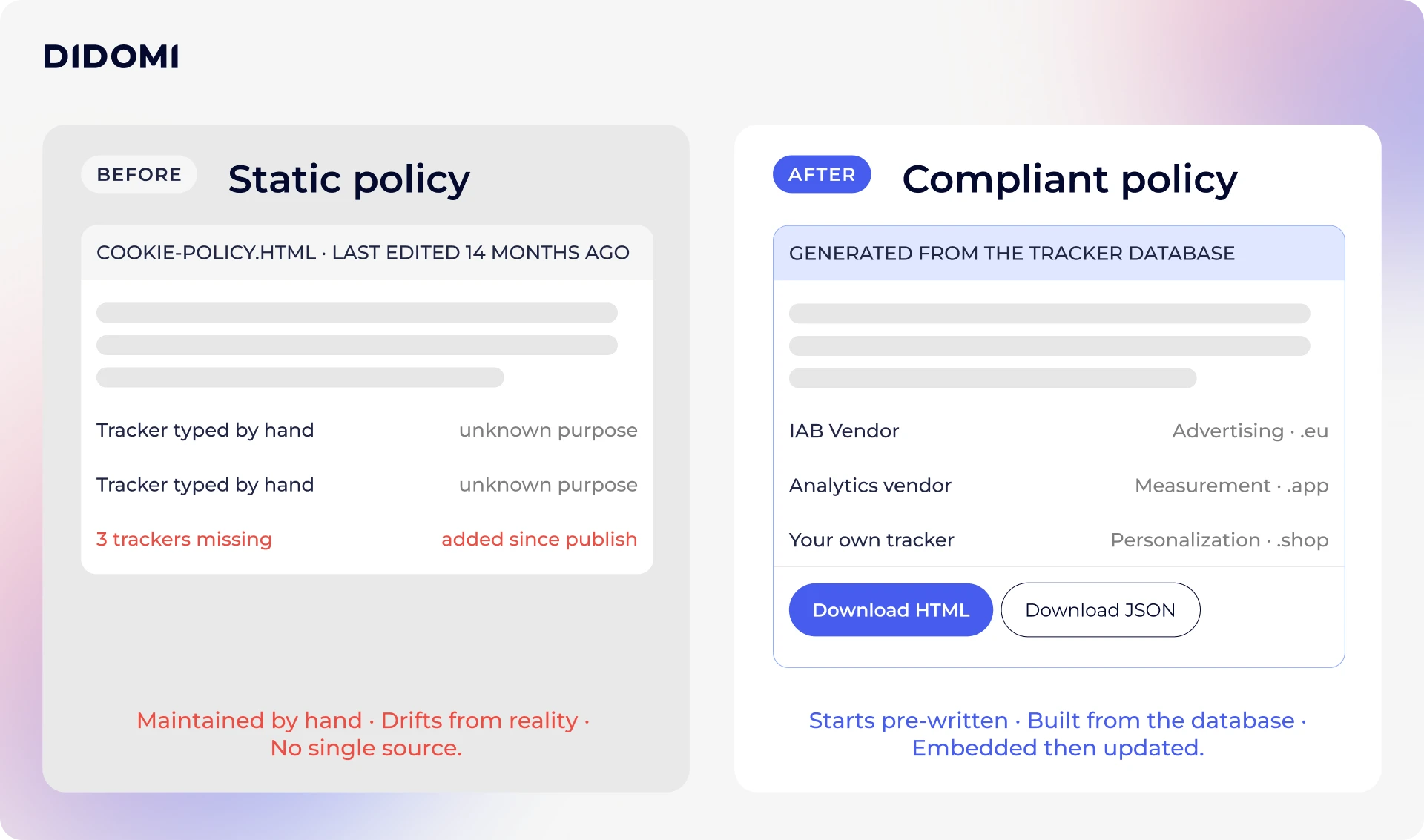
Wrong. But it’s not because companies want to purposefully deceive their users about what trackers are on their websites. It’s because most cookie policies are created at a single point in time. Websites change constantly, whether it’s marketing adding a new pixel, a vendor swapping analytics providers, or a new A/B testing tool went live. Many policies were drafted once, perhaps by a legal team who never works on webpages, then thrown up onto the site and forgotten about. The out-of-date policy only gets exposed by a potential lawsuit.
Didomi already helps thousands of companies ensure compliance as they collect consent from users. This article explains how Didomi is now tackling the lapse in compliance that happens with cookie policies with our two new features, the Cookie Policy Generator and the Tracker Database.
The static policy problem
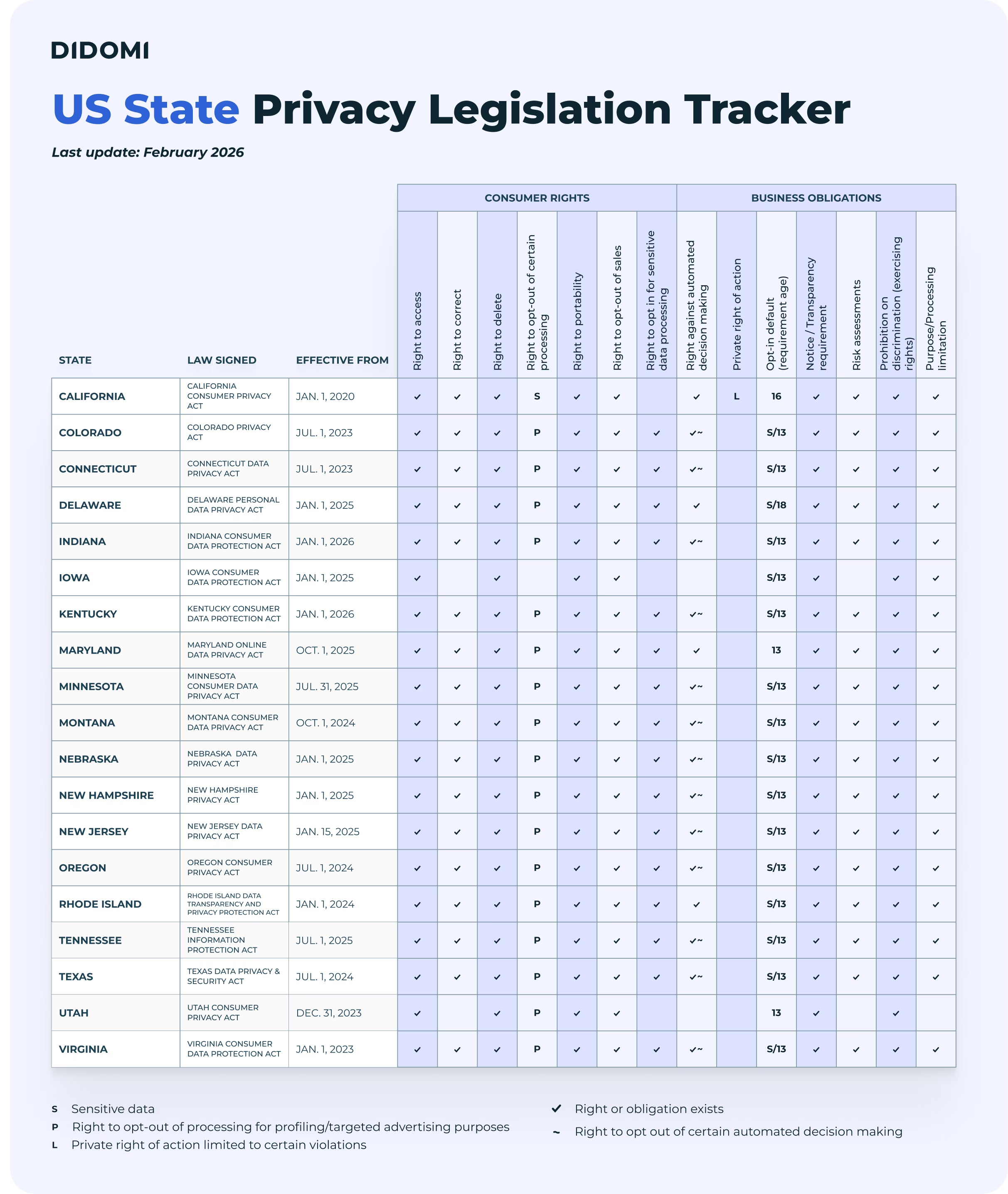
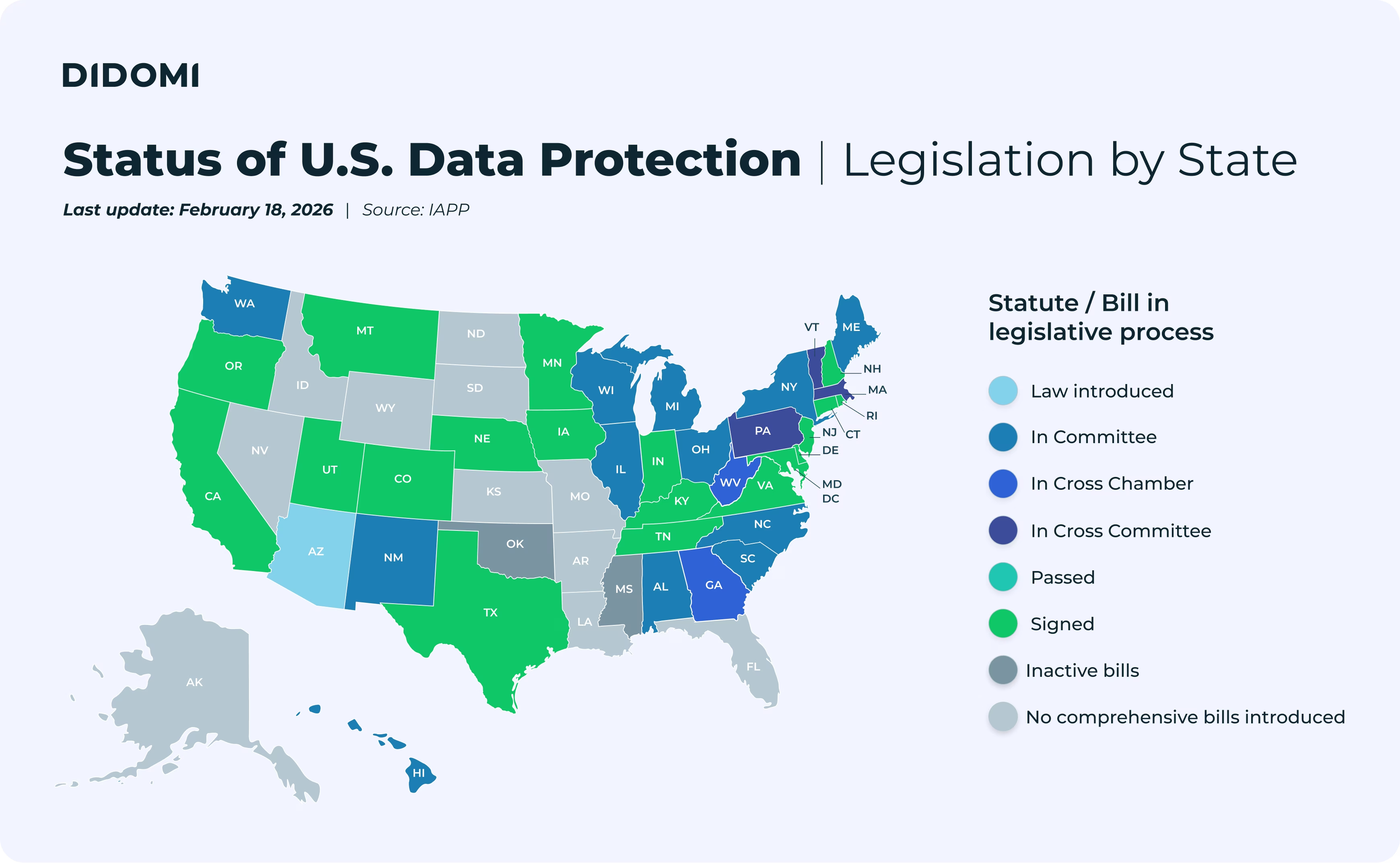
Most cookie policies exist as a one-time deliverable. Someone fills out a questionnaire or a template, a document gets published, and the “requirement” is met. But just having a cookie policy isn’t enough to meet (the ever-growing) list of privacy regulations, which includes ePrivacy, GDPR, CCPA, and more.
The mismatch between a published policy and actual site behavior is one of the easier things for a regulator or litigant to point to, because it doesn't require a technical investigation to spot. It just requires comparing the policy to the browser's own cookie storage. With supervisory authorities willing to impose substantial monetary penalties (approximately EUR1.2 billion in 2025 in Europe alone), ensuring an accurate cookie policy is an important part of being compliant.
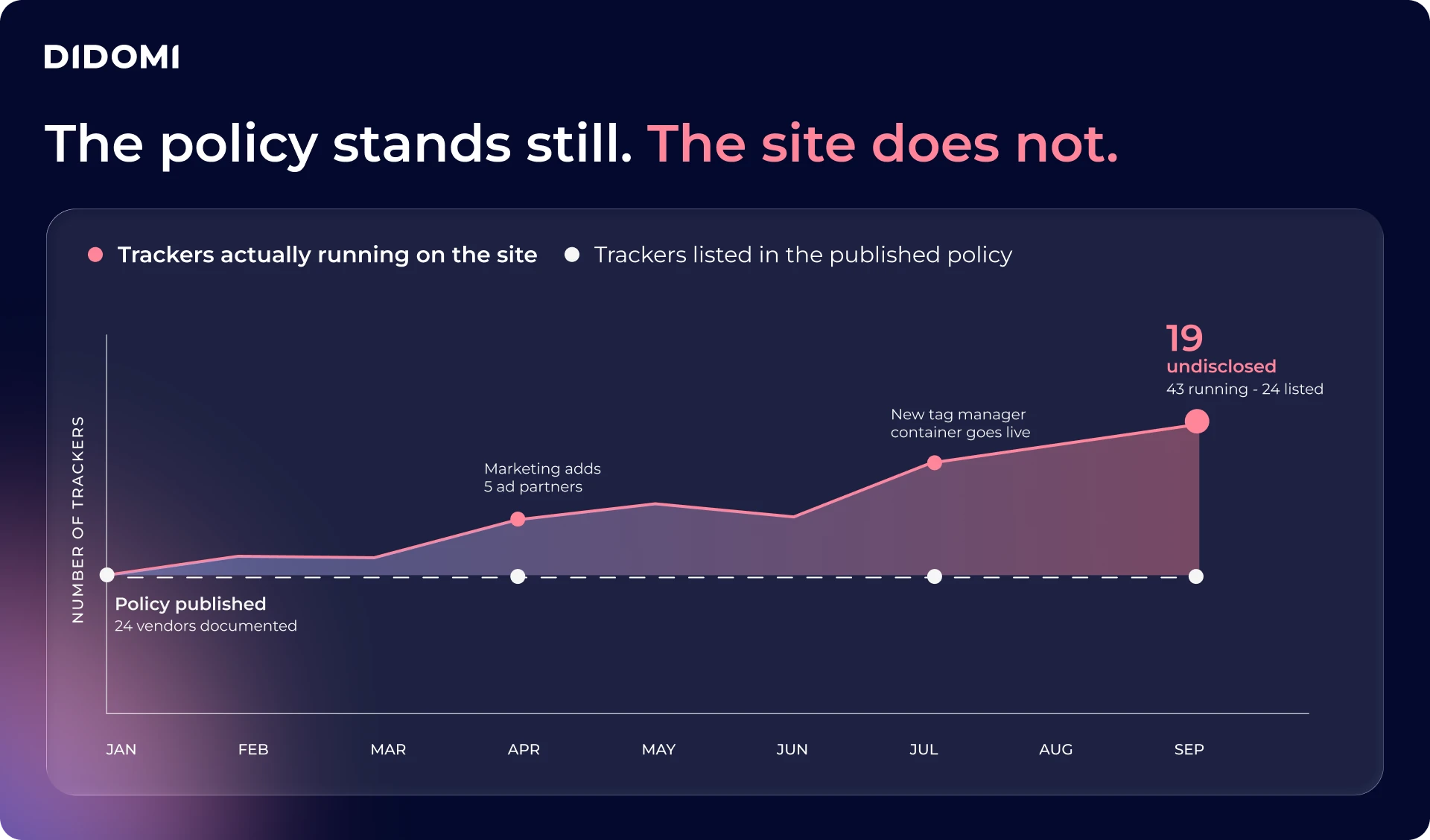
Whether policies are written by in-house legal teams or generated using a stand-along tool, there is a lack of understanding about what’s actually happening on web pages. This leads to the creation of a static document. Within a couple of weeks or months, the cookies and trackers and websites can chance substantially, making the cookie policy obsolete and a compliance risk.
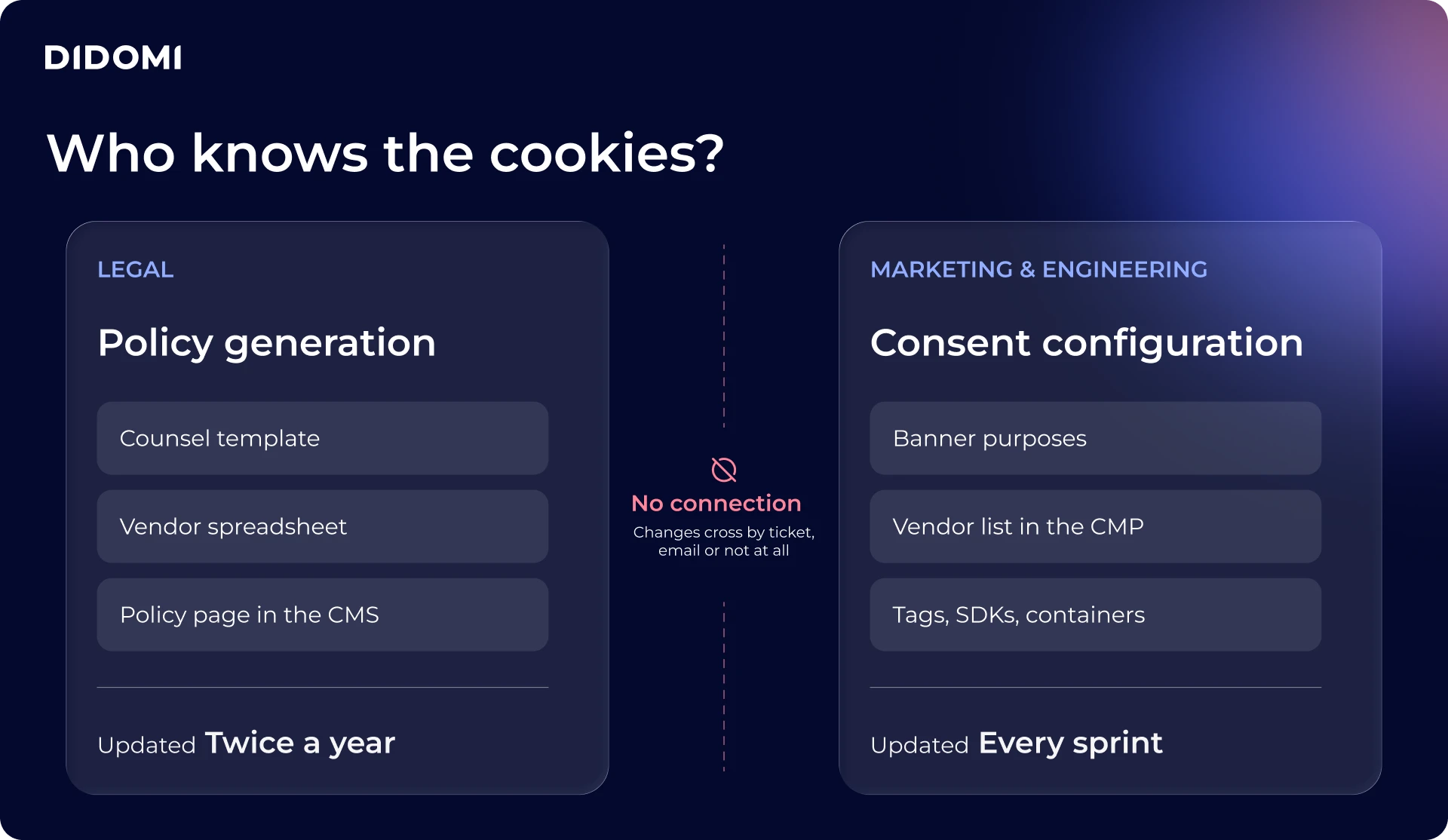
Multiply this problem by every website within a domain, across every deployment. Keeping up-to-date cookie policies is not just a legal requirement, it’s also an important part of building and maintaining trust with your users.
How a cookie policy generator from Didomi helps
Didomi knows a thing or two about cookies. We’ve scanned thousands of webpages to understand the cookies and trackers that actually exist. We know how those cookies and trackers help drive better customer experiences and return on ad spend. And we know the regulations that apply to them.
So now we are taking another step to help ensure your data collection practices remain compliant with whatever regulation applies to your users. With the Cookie Policy Generator and Tracker Database, you can build compliant cookie policies for all of your web properties using the cookies and trackers that are actually on your web properties.
Here’s how it works:
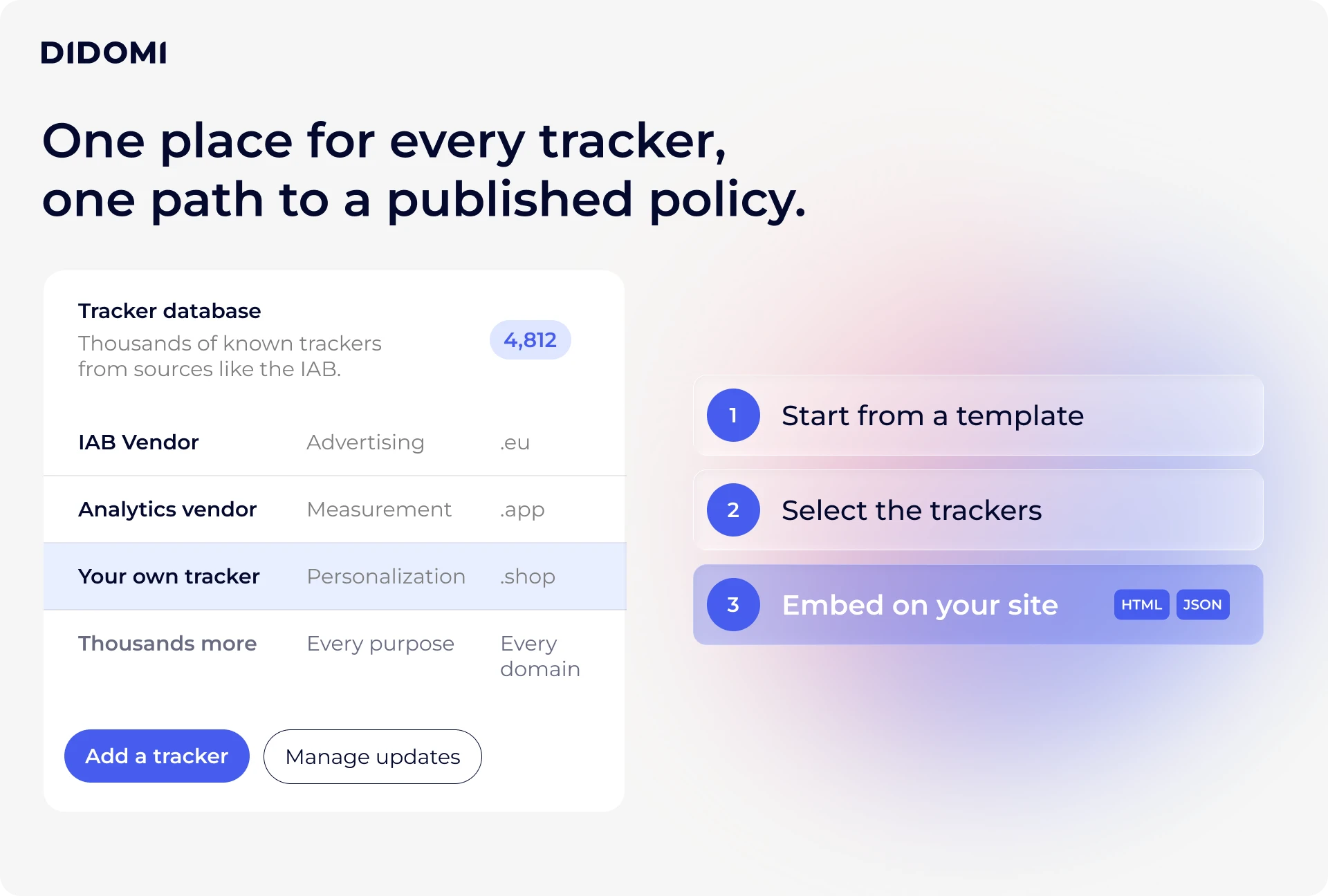
The new Tracker Database lists thousands of known trackers from sources like the Interactive Advertising Bureau (IAB). The database also allows you to add additional trackers. Every purpose, every vendor, across every domain, is all tracked in one place, making it easy to manage updates, add new trackers, and keep things organized.
From there, you can create your cookie policies. The creation process is simple and starts with a pre-written policy that can be customized to match your needs. Then, you select the trackers to be included in the policy from the tracker database. That’s it. You can then download an HTML or JSON file to be embedded into your website.
You can view and manage your created policies from the console, making it easy to update polices as needed. These new features help keep you websites compliant and transparent while reducing the amount of manual work and extra tools required to do so.
Why we built this (and for whom)
Our solutions already help organizations increase opt-in rates for cookies and trackers across touch points, so the logical next step was to help with cookie policies using our expertise in the privacy space.
Sometimes, the people who feel the static-document problem aren't always the ones who can fix it. The problem only gets worse when managing multiple sites or brands. With these new features, the Didomi console is the one source of truth for all your cookies and trackers and your polices across every domain, no matter the role.
- For privacy officers or compliance leads, the Cookie Policy Generator provides a policy that’s generated from the cookies in the companies database, reducing guesswork and compliance risks. That's one less recurring audit task, and one fewer place where an outdated document can become a liability.
- For marketing or product teams, adding a new vendor or adjusting a purpose no longer means remembering to loop in someone to update a separate document. The policy stays current as a byproduct of the work already being done in the console.
With these new features, your cookie policies stop being static documents that not only fail to provide transparency to your users, but also leave your web properties at risk. Your policies now become part of a privacy workflow that includes consent and cookies, making it easy to stay up to date and compliant.
Ready to see it in your console? Log in to Didomi to get started, or talk to our team to learn more:
{{talk-to-an-expert}}