.svg)





For the past 8 years, since I started Didomi with my co-founders, Jawad Stouli and Raphaël Boukris, every year has felt like our biggest yet, as it should. But in 2025, I can safely say that this has been the case even more so, and for good reason.
From a 72M€ investment by a new strategic partner, the acquisition of 2 prestigious companies, profound geopolitical and technological developments seemingly happening every month, and, of course, AI disrupting everything in its path… We've kept busy.
As we prepare to close the last quarter of the year and kick off 2026, let’s reflect on the past 12 months, celebrate our milestones, and take a peek at what’s next for Didomi.
Reflecting on the data privacy industry in 2025
Before looking inwards and reviewing our achievements from the past year, we should consider how our industry has changed since my last rewind.
We kicked off the year by asking our team and industry experts for their predictions for the data privacy industry in 2025. I’m pleased to say a lot of it still rings true a year later: AI is, of course, still front and center, we saw developments in the third-party cookies saga in Google Chrome; privacy standards are a key topic across jurisdictions…
Let’s check some of the most notable events of 2025, broken down into three categories.
Europe kept driving data privacy conversations
While data privacy is undoubtedly becoming more global every year, we saw in 2025 that Europe has continued to set the tone and shape what compliance entails.
The GDPR celebrated its 7th birthday and has been under scrutiny recently over the potential need for simplification to promote innovation for European businesses. The Digital Omnibus proposed by the European Commission was officially announced, outlining ideas for how Europe could achieve this goal and reduce the impact of consent fatigue.
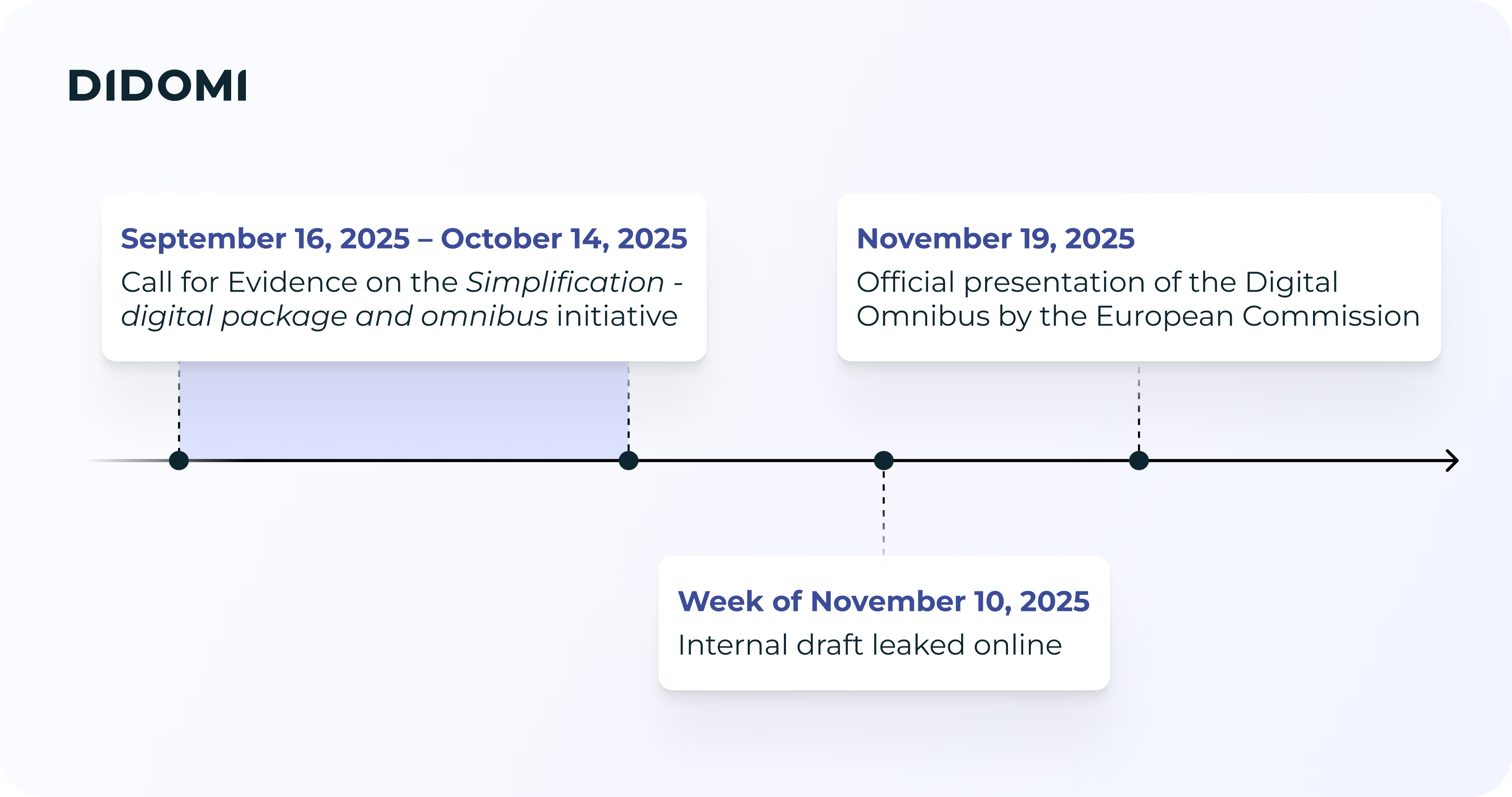
This is a topic that we anticipate will continue to dominate a lot of the conversation in 2026. To get ready, check out our primer on the proposed EU simplification package, and read the opinion of our Chief Privacy Officer, Thomas Adhumeau.
Meanwhile, in the UK, topics like consent or pay have generated a lot of conversation, as well as the proactive enforcement by the Information Commissioner's Office (ICO), the national regulator, auditing some of the country’s biggest websites on their cookie collection practices, and the introduction of the Data (Use and Access) Act 2025.
In Germany, the Administrative Court of Hanover issued a decision that sparked debate over the legality of Google Tag Manager.
Lastly, the case between the IAB Europe and the Belgian APD over the TCF has reached one of its most significant milestones in years. Still, it is far from over, with the Interactive Advertising Bureau releasing an updated TCF v2.3 that addresses some of the issues outlined by the courts.
All that to say: European data privacy is still bubbling with activity, debate, case law and innovation, and we’re excited to continue providing guidance to our client base and the market at large for many more years to come.
The United States’ privacy patchwork continued to accelerate
We’ve been covering data privacy in the United States for years, and with a significant part of our team on the ground (more on that later in the article), we are well aware of how exciting and lively the privacy landscape has become in North America.
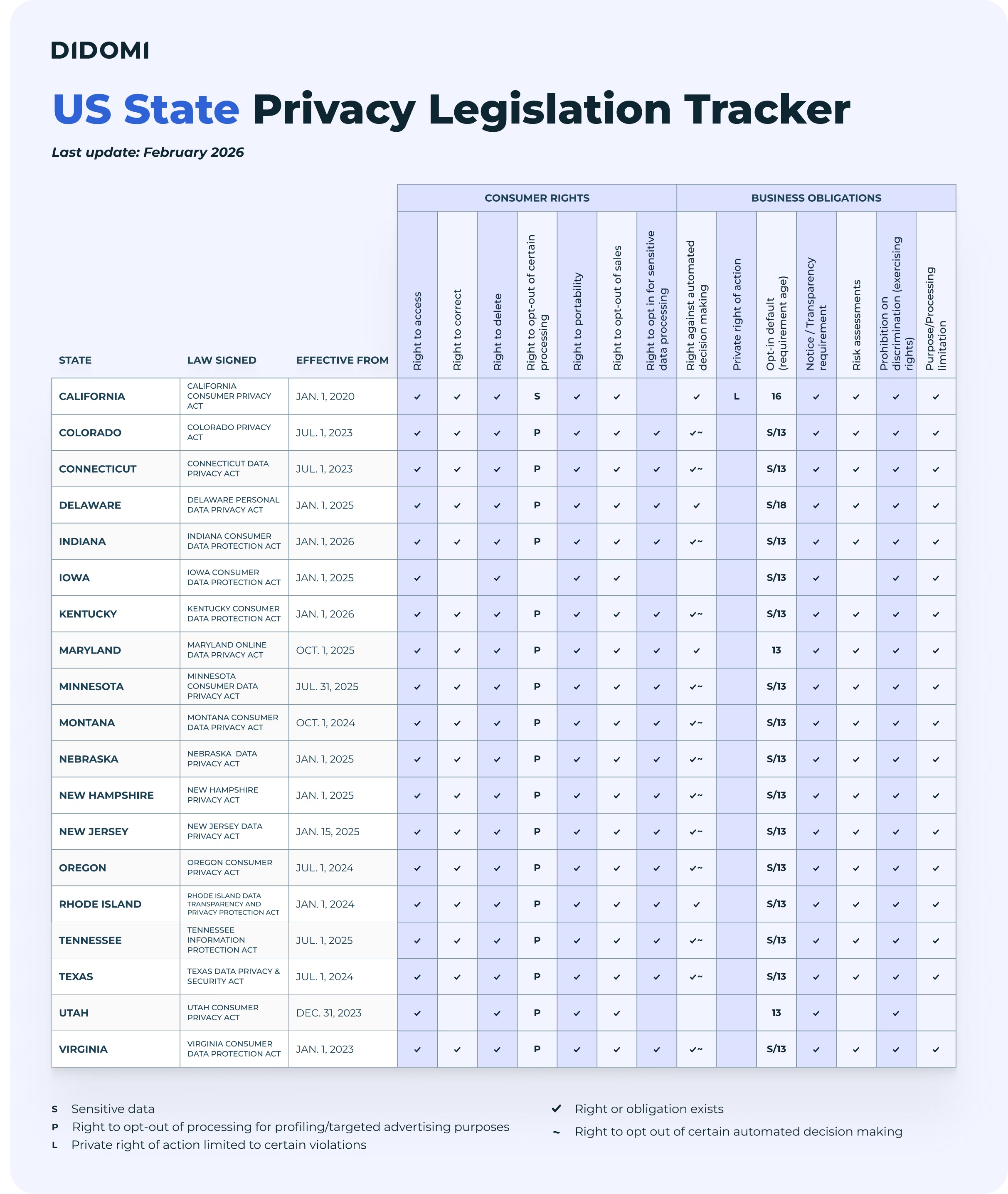
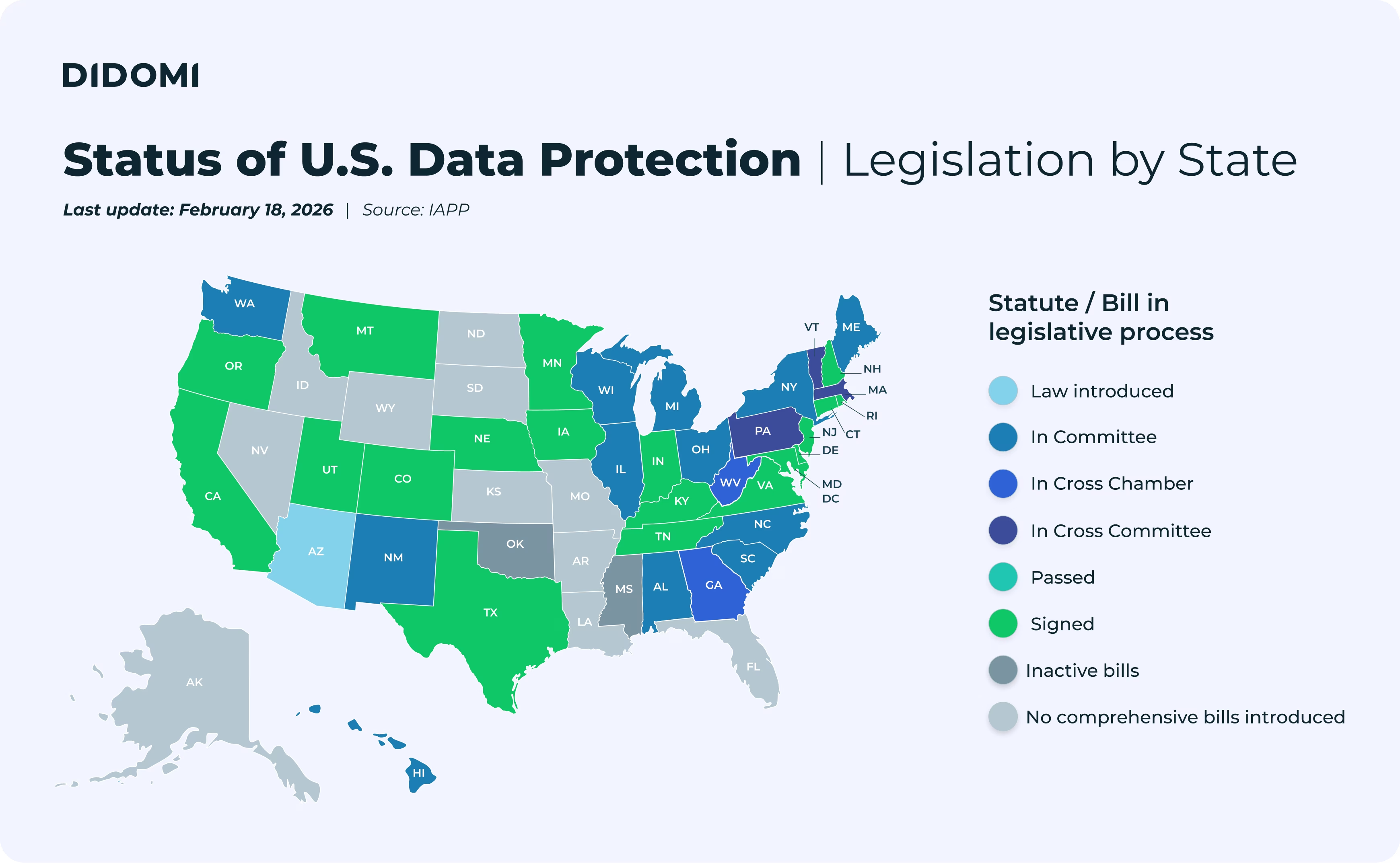
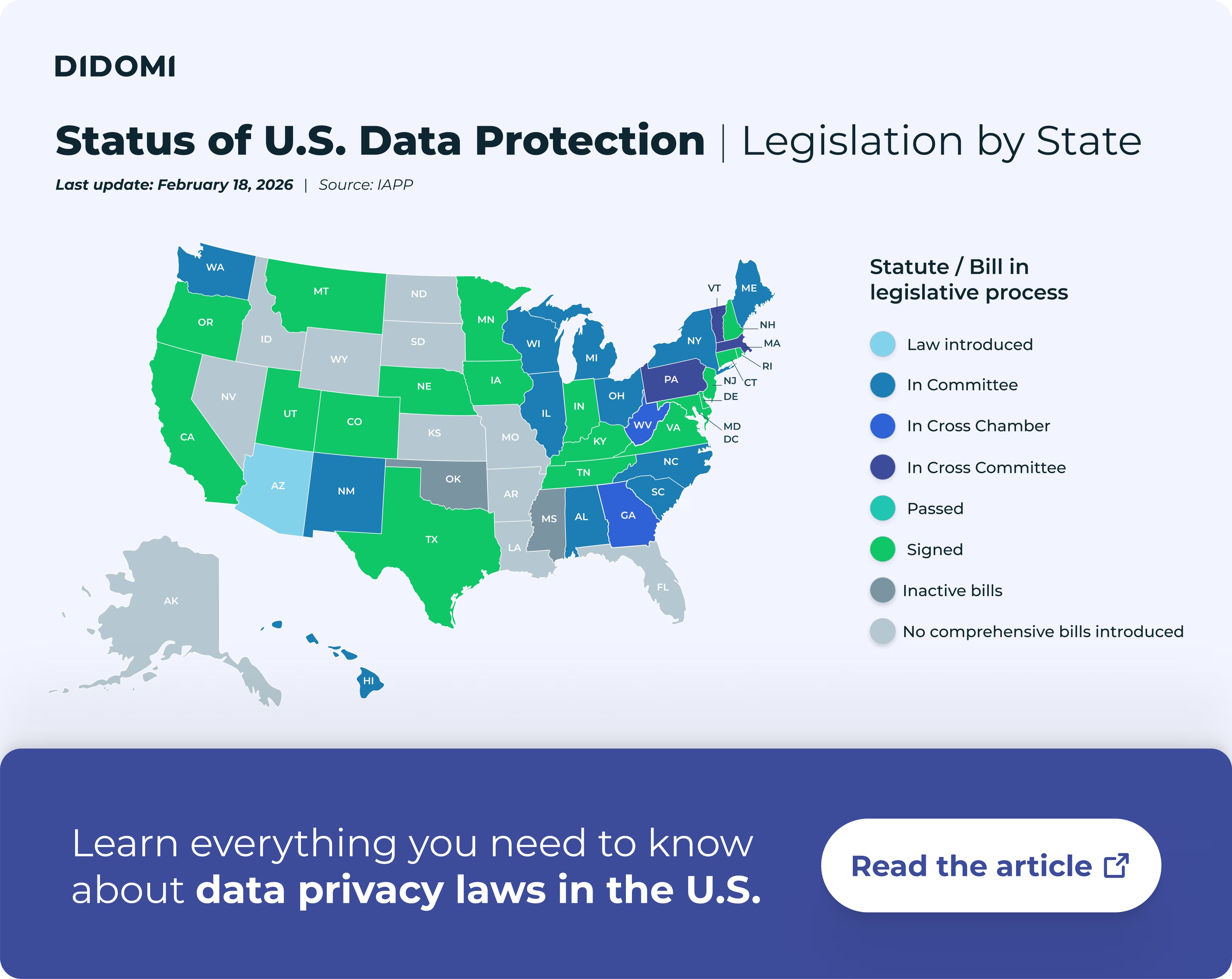
The U.S. patchwork of privacy laws has continued to grow in 2025, a trend that will continue in 2026, with the introduction of three new laws as early as January 1st in Indiana, Kentucky, and Rhode Island:
.png)
While EU-U.S. data transfers have been under intense scrutiny (and at risk) amid political tensions and geopolitical uncertainty, we’ve seen promising signs that data privacy has become a priority for several states, particularly in relation to the Global Privacy Control (GPC) mechanism.
Our team has covered enforcement related to GPC over the past years, reporting millions of dollars in fines in California, Colorado, and Connecticut in 2025, and indicating a probable continued focus on coordinated sweeps by U.S. states to target businesses that fail to honor GPC signals:
If you have a privacy mechanism on your website that’s not working, it’s a tell for regulators that you’re not paying attention. If they see that, they’re likely to assume that there are further issues going on and initiate an investigation to dig deeper.
- Julie Rubash, General Counsel and CPO at Sourcepoint by Didomi (Source: Everything you need to know about GPC for 2026)
These recent developments in the U.S. and the increased pressure from the general public to prioritize data privacy are exciting, and we can anticipate more in 2026.
Global shifts and practical realities shaped privacy in 2025
In parallel with regulatory developments in Europe and the accelerating patchwork in the U.S., 2025 also saw a set of cross-border shifts emerging as priorities for every global business looking to foster trust with customers.
The year kicked off with another chapter in the everlasting saga of the deprecation of third-party cookies in Google Chrome, which took a surprising turn with the company cancelling its plans altogether.
Ultimately, this doesn’t change much as the changes we’ve been observing for years are here to stay, and businesses are increasingly aware that first-party data is becoming the most valuable resource for personalization. Preparing for a post-third-party cookie world has long been a priority for leading companies, and should remain an objective for 2026, regardless of where Google might take the discussion next:
If the shift does not happen today, it will happen tomorrow. And maybe not because Google says so, but because Google might no longer be in charge.
If Chrome were ever to be spun off or placed under an independent foundation, a scenario that’s not entirely outlandish in a post-antitrust landscape, this decision could simply be delayed, awaiting the right governance to carry it out.
- Thomas Adhumeau, Chief Privacy Officer at Didomi
Other major tech companies have joined Google in building their own consent mode, namely Microsoft with its Microsoft UET Consent Mode and Amazon with its Amazon Consent Signal (ACS). This is another indication of the importance of data privacy and consent management for businesses worldwide, particularly large enterprises with complex infrastructure.
On the compliance side, a very important trend that’s been gaining momentum worldwide is children's privacy.
Protecting children online has become a societal question that we should all get behind, and we’re seeing strong measures taken in Australia, for example, with the government recently banning social media to underage users. In the United States, lawmakers are also pushing for increased scrutiny and control, and I recommend you check out our guide on the topic for a comprehensive overview:

From a technological perspective, some of the most exciting innovations throughout the years have been focused on the practical applications of privacy and how to empower organizations to find the proper harmony between privacy and performance:
- Our cross-device and cross-domain features are more relevant than ever as the debate over consent fatigue heats up.
- Privacy-enhancing technologies (PETs) are promoting innovation with new solutions.
- Server-side tagging is emerging as a critical opportunity for businesses to optimize their data practices while respecting user privacy (more on that later in the article)
Last but definitely not least, Artificial Intelligence (AI) has been on everyone’s mind this year, with consideration of how to balance the possibilities offered by these new technologies with the importance of maintaining privacy standards that are foundational to our societies.
I will go into more details and share my views on the topic soon, but I suggest watching my conversation with Max Schrems, the famed Austrian lawyer and privacy activist, and Marie Fenner, Global senior vice president at Piano, from a few months ago, to hear some fascinating exchanges on the topic of AI and data privacy:
We now have this ‘arms race’ for AI. (...)
I don’t see it as a race; it’s probably more like a marathon in reality. (...) But in that whole hype, the question is “does anybody bother about the GDPR?” and the answer is probably no. That means risk is building up somewhere in the basement.
- Max Schrems, Chairperson of noyb, privacy lawyer, author, and speaker
As data privacy continues to grow and bleed into the entire digital world around us, new trends and priorities move faster than the map can keep up. Businesses will need to work closely with expert partners in 2026 to stay on top of these.
Celebrating our milestones and achievements
Time to look at some of the key achievements from the Didomi team this year. There are many to choose from, but it’s hard to mention anything before two of the biggest milestones in our company's history (possibly ever).
We raised 72M€ with Marlin Equity Partners and acquired the server-side tagging platform, Addingwell
Last April, we announced our partnership with the global private equity firm Marlin Equity Partners to raise 72M€ and acquire server-side tagging platform Addingwell.
This partnership represents an important step toward a more unified, consent-first approach to data activation. By leveraging server-side technology, organizations benefit from improved performance, higher-quality data, and greater control over how consented data is handled.
We're thrilled to combine with Didomi. Our shared vision for innovation and commitment to customer success have always aligned, and we see meaningful expansion opportunities for our combined teams.
- Romain Baert, Chief Executive Officer at Addingwell (source: Didomi partners with Marlin Equity Partners to acquire server-side tagging platform Addingwell)
Together, we will help accelerate server-side strategies with scalable, secure, and fully integrated solutions designed to meet today’s privacy and compliance expectations.
If you want to learn more about the deal and the reasons behind this step forward for our industry from Addingwell’s perspective, head to this interview with Romain Baert, Addingwell’s co-founder.
We acquired Sourcepoint to join forces in building the future of privacy technology
On the back of the fundraising and Addingwell acquisition, we announced another big milestone in August: the acquisition of Sourcepoint, a historic Didomi competitor and a major player in the AdTech and data privacy space in the U.S.
By uniting our two pioneering teams around a shared vision, we strengthened our expertise, product capabilities, and international presence:
We are excited to be part of the Didomi team. We began our journey in 2015 with the goal to help the world’s most influential brands turn privacy compliance into a catalyst for better business outcomes.
Together, we can have an even bigger impact on how businesses collect, govern, and activate first-party data, while also staying ahead of the curve when it comes to AI or whatever comes next.
- Ben Barokas, Co-Founder and CEO of Sourcepoint (source: Didomi and Sourcepoint join forces to build the future of privacy technology)
This strategic move supports our mission to help organizations navigate an increasingly complex regulatory environment while laying the groundwork for a unified platform that continuously evolves with the digital and regulatory world around us.
Our team sat down with Brian Kane, Sourcepoint’s co-founder, to discuss his background and his vision for the partnership. I recommend reading the article to learn more about a fascinating experience and about our shared vision as a combined company.
We constantly improved our solutions to answer the needs of our clients and partners
Beyond these strategic moves, the Didomi team has worked throughout the year to improve our solutions, increase accessibility and stability, and better serve our customers by addressing their specific needs.
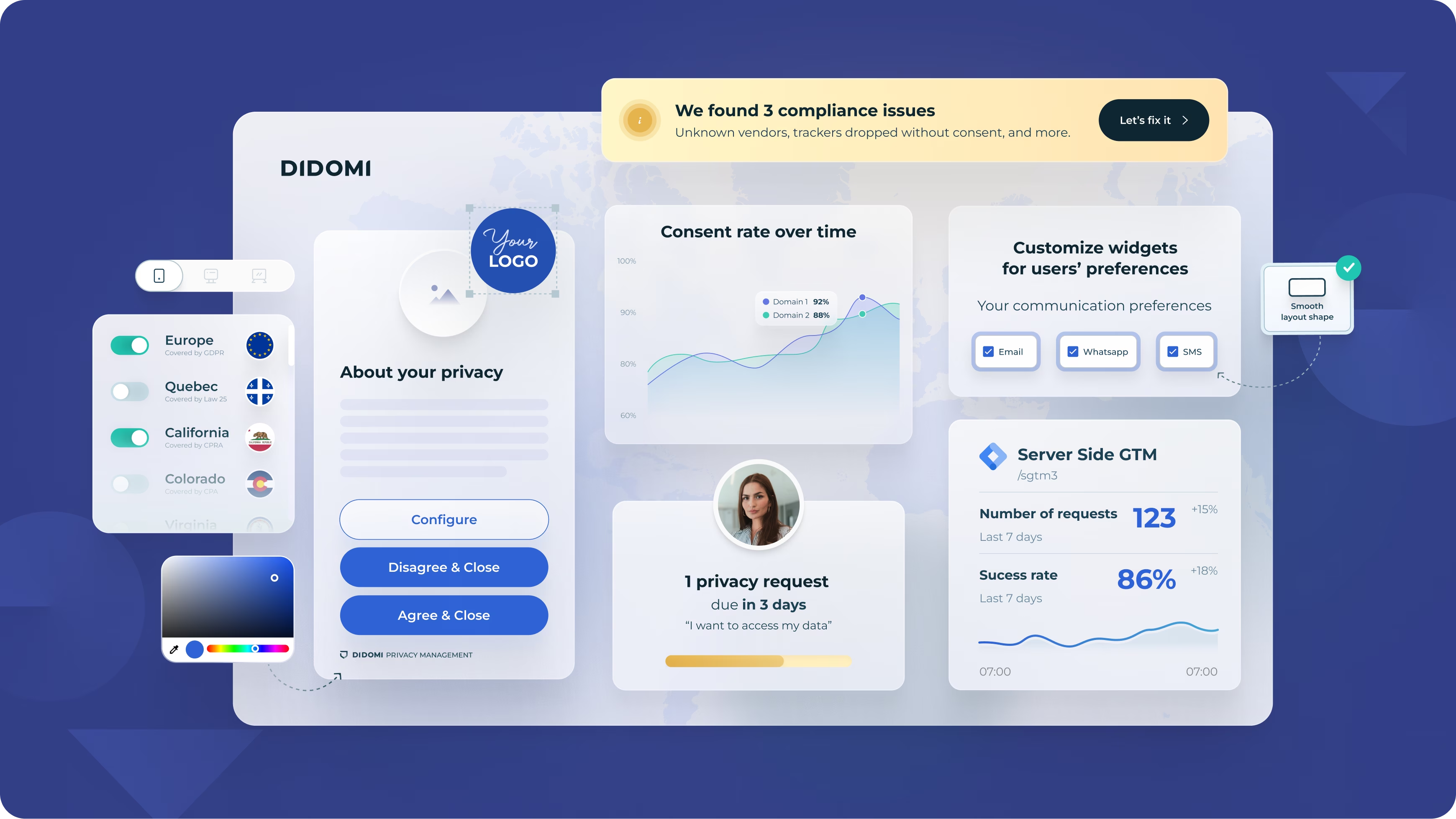
It is virtually impossible to cover every update and release from the past year. The team does a great job of sharing progress in these pages through blog posts about new features and quarterly updates that cover our latest product news.
Still, some releases and product milestones stand out:
- CMP U.S. coverage: We extended US state support through 11 additional states, whether you implement them with or without IAB Global Privacy Protocol (GPP) support.
- Technological partnerships: We built additional features to expand our partnerships with Google, obtaining a Gold Tier CMP certification and ‘app ready’ badge, Adobe through a native, real-time Adobe Experience Platform connector for consent and preferences, and Amazon’s Consent Signal and VegaOS for CTV.
- Advanced Compliance Monitoring (ACM): Our ACM infrastructure updates improve accuracy and enable larger, more targeted scans, in part thanks to artificial intelligence.
- Server-side tagging: We delivered robust server-side support for tagging, tag monitoring, and serving CMP assets from a first-party context.
To see our solutions in action with practical steps and results, I encourage you to check out the great case studies we published with our customers throughout the year.
From a collaborative perspective, our Didomi Product Advisory Group met twice in 2025, once in Paris and once in New York, bringing together major clients from different industries and privacy industry experts to meet our product team for a day of knowledge sharing, workshops, and co-constructing roadmap priorities for the coming year.
And of course, it wouldn’t be an end-of-the-year review without some badges. Didomi was consistently named a leader in reports issued by review platform G2 throughout 2025, confirming our strong market position with 150+ verified reviews and an average user score of 4.6/5.
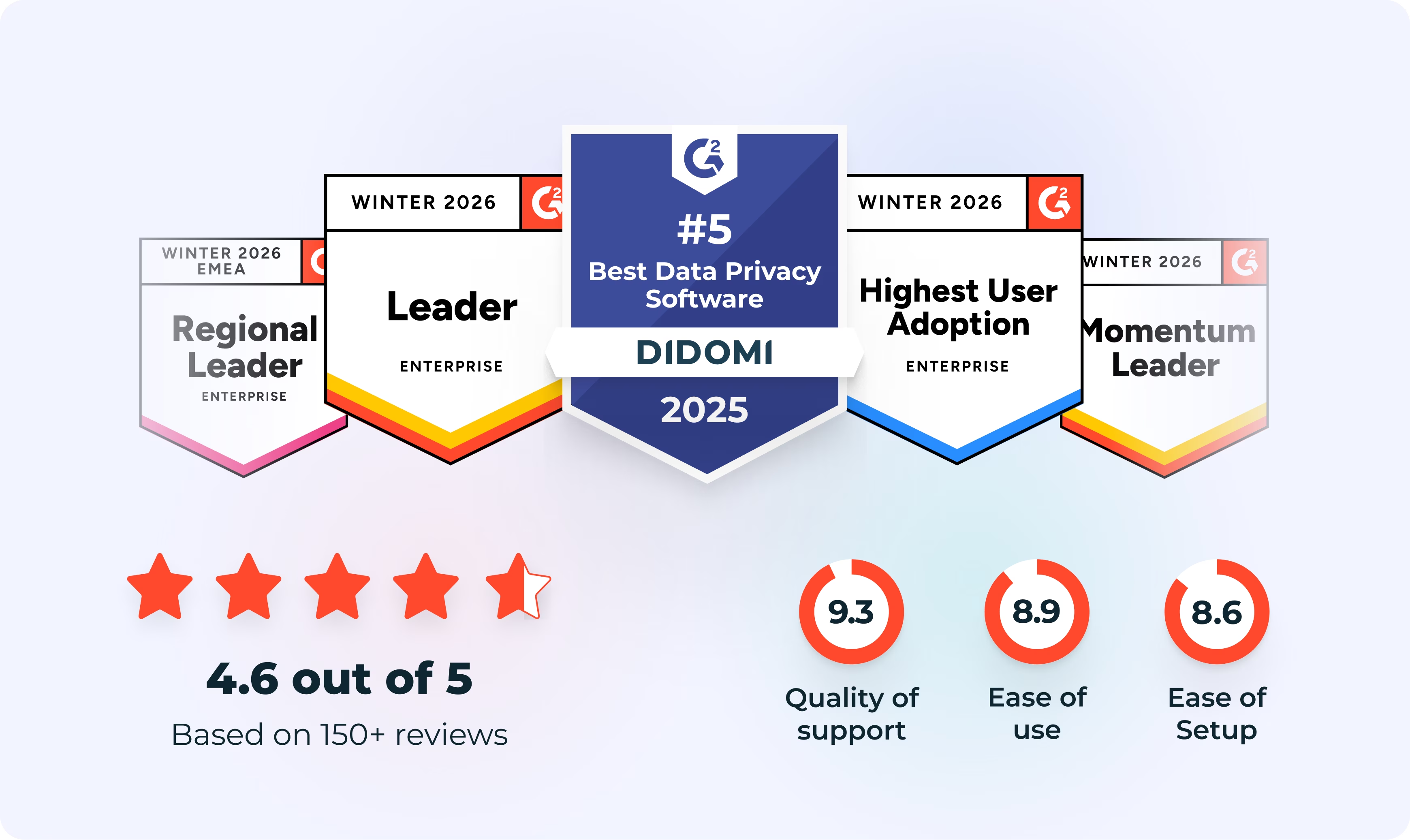
This is made possible by the great work of everyone at Didomi, who build, support, and advocate for our solutions, at the heart of what we strive to create as a company. Thank you!
Looking ahead: What’s next in 2026?
2025 is almost in the rearview mirror, and it’s time to look forward. What will be next for Didomi? Experience has taught me that you can’t predict the future (especially in a field like ours), but here are some of my predictions, and some of the things we’re preparing for in 2026:
- Server-side tagging will become the default as more businesses seek to address the limitations posed by client-side implementations and better control their data collection.
- Artificial intelligence will challenge business models and privacy expectations in unexpected ways, which we’re already working to tackle and embrace effectively. I will share more about my thoughts on the topic in the coming weeks.
- Privacy standards will continue to emerge and will hold the key to addressing pressing global privacy issues (e.g., consent fatigue).
- Unified consent and preference management will become a priority for companies looking to establish true consent lineage across all devices and domains, as consumers continue to diversify their digital footprint and seek cohesive privacy experiences before trusting companies with their data.
We asked the team (and some prestigious external collaborators) for their predictions about what’s next for privacy in 2026. We’ll compile their answers and share them in the coming weeks. Follow us on LinkedIn and sign up for our newsletter to be in the loop when the article comes out. You don’t want to miss it!
Last words for 2025
As we look ahead to what promises to be an exciting 2026, with expanding data challenges for companies, likely regulatory updates, shifting technologies, and increasing operational complexity, our ambition stays the same: to be a reliable, long-term partner for organizations navigating data privacy and consent with clarity, confidence, and pragmatism.
We will continue to deliver the level of performance, service, and support our customers, clients, and partners expect from Didomi. We are proud to be recognized as a premium solutions provider, and we remain committed to the high standards that define our work.
And as always, I’m excited to reveal what we’re working on, with more meaningful innovations already taking shape on our roadmap.
On behalf of everyone at Didomi, I thank you for your continued trust and support as we move into the new year. See you in 2026!