.svg)




If you collect consent on a European website, your industry peer group is one of the most insightful benchmarks you can use, because consent rates don't mean the same thing across sectors.
A 75% consent rate might be above average in Finance & Insurance and below average in Media & Publishing. But what does "good" actually look like in your industry, and what's driving the gap?
What the data says
Based on data collected throughout 2025 and published in our 2026 State of Data Privacy benchmark, we tracked consent rate performance across 16 industries on European websites, measuring consent rate, opt-in rate, and no-choice rate. For a full definition of these metrics, see our CMP metrics glossary.
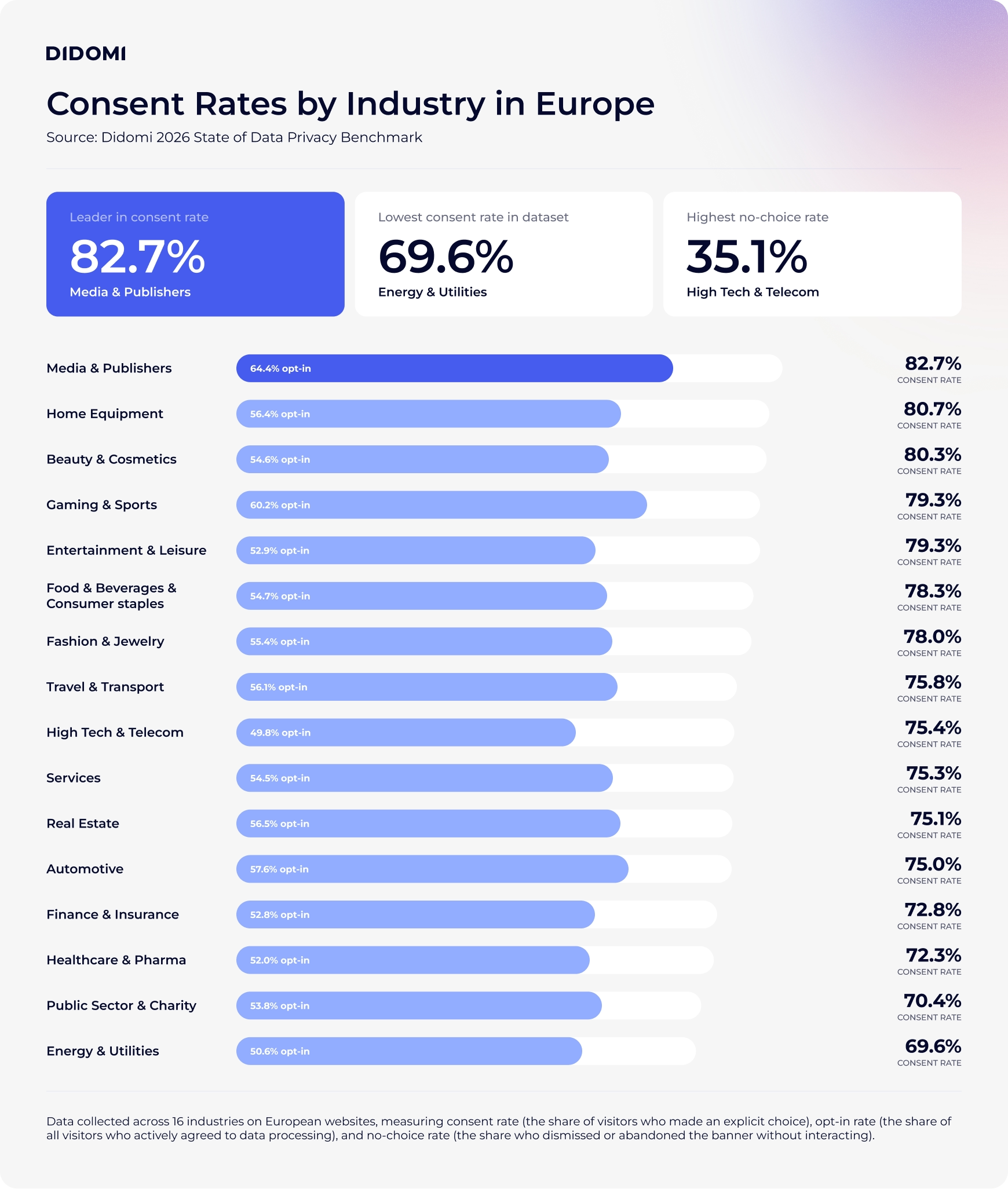
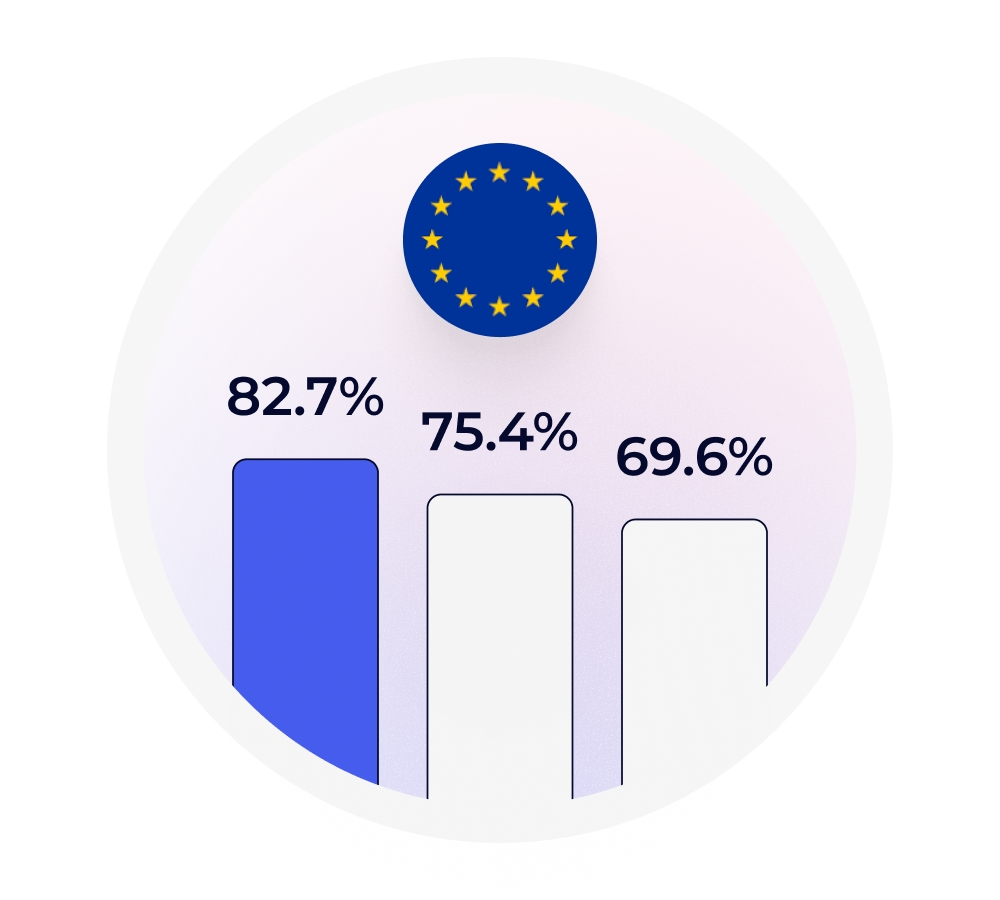
Media & Publishers led the dataset with an 82.7% consent rate and a 64.4% opt-in rate, the highest opt-in of any industry. Their no-choice rate of 22.6% is among the lowest, which reflects years of investment in consent UX driven by direct dependence on advertising revenue.
- Home Equipment: 80.7% consent rate, 56.4% opt-in, 30.0% no-choice
- Beauty & Cosmetics: 80.3% consent rate, 54.6% opt-in, 31.5% no-choice
- Gaming & Sports: 79.3% consent rate, 60.2% opt-in, 24.1% no-choice. Despite a near-average consent rate, this sector records the second-highest opt-in rate in the dataset, likely reflecting a stronger perceived value exchange.
- Entertainment & Leisure: 79.3% consent rate, 52.9% opt-in, 33.3% no-choice
- Food, Beverages & Consumer Staples: 78.3% consent rate, 54.7% opt-in, 29.7% no-choice
- Fashion & Jewelry: 78.0% consent rate, 55.4% opt-in, 29.1% no-choice
- Travel & Transport: 75.8% consent rate, 56.1% opt-in, 26.0% no-choice
- High Tech & Telecom: 75.4% consent rate, 49.8% opt-in, 35.1% no-choice. The highest no-choice rate in the dataset, with more than one in three visitors abandoning the banner without making a choice.
- Services: 75.3% consent rate, 54.5% opt-in, 27.6% no-choice
- Real Estate: 75.1% consent rate, 56.5% opt-in, 24.7% no-choice
- Automotive: 75.0% consent rate, 57.6% opt-in, 23.1% no-choice
- Finance & Insurance: 72.8% consent rate, 52.8% opt-in, 27.3% no-choice
- Healthcare & Pharma: 72.3% consent rate, 52.0% opt-in, 27.5% no-choice
- Public Sector & Charity: 70.4% consent rate, 53.8% opt-in, 23.2% no-choice
- Energy & Utilities: 69.6% consent rate, 50.6% opt-in, 27.0% no-choice. The lowest consent rate in the dataset.
Across all 16 industries, consent rates ranged from 69.6% in Energy & Utilities to 82.7% in Media & Publishers, a 13-point spread that underlines how much sector context matters when benchmarking your own performance.
What this means for you
If your metrics fall below your industry average, start by identifying which number is the problem. A high no-choice rate could signal that users are disengaging from the banner rather than making a deliberate choice, which can affect data quality even when opt-in numbers look acceptable. A low opt-in rate, on the other hand, may reflect a structural trust gap that banner design alone cannot fix.
Two things to keep in mind as you consider what to change:
- Compliance is non-negotiable. Some configurations may correlate with better performance in our data but do not necessarily reflect sound privacy practice. Always involve your legal team before making changes to your consent setup.
- Consent rate is shaped by a wide range of factors. Your audience demographics, device mix, banner format, and the nature of the value exchange all affect where you land. A gaming platform and an energy provider will never have the same baseline, and shouldn't be expected to.
Ultimately, the organizations that consistently perform well on both the performance and compliance fronts are those that treat privacy as a design principle rather than a constraint.
What's next for consent by industry in 2026
The conditions around consent performance are set to become more demanding across all sectors. Regulators are sharpening their focus on how consent was collected, which means industries with low engagement or high no-choice rates will face increasing pressure. At the legislative level, the Digital Omnibus Package is also raising questions about how consent collection could be standardized across digital environments.
Different sites will be able to make new, specific consent requests, tailored to their particular use cases or ecosystems.- Romain Gauthier, CEO at Didomi (Source: Mind Media)
Our team at Didomi is actively contributing to these discussions and will continue to publish updates as the legislative process moves forward.
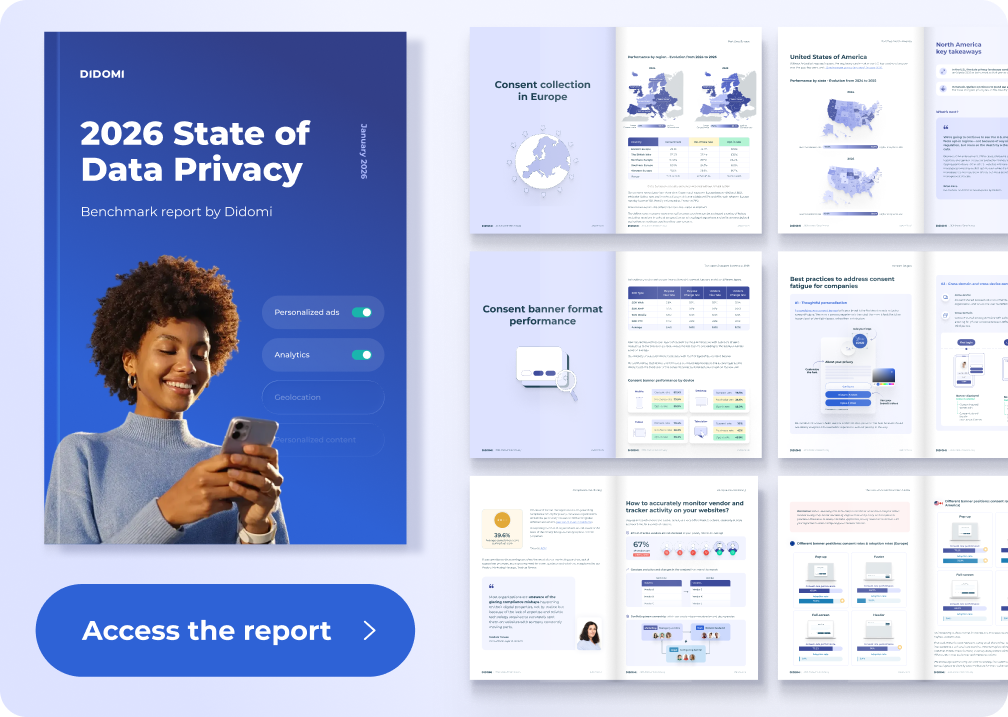
More about the state of data privacy in 2026
Industry consent rates are just one piece of a much larger dataset. Our 2026 State of Data Privacy benchmark covers consent collection across Europe and North America, banner format performance, the impact of refusal options on consent rates, compliance monitoring, artificial intelligence, and more. Download it now: