.svg)


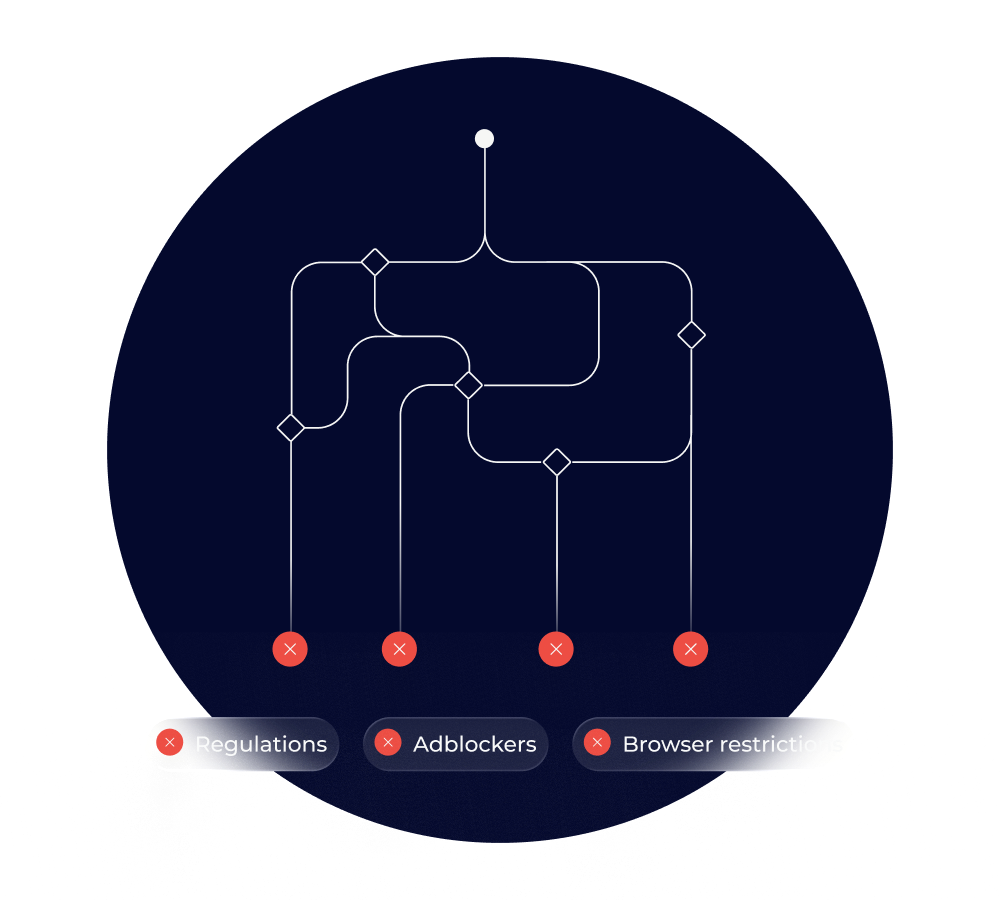


The data privacy industry has spent years developing a vocabulary for what's breaking: attribution gaps, consent drift, cookie deprecation, each with its own diagnosis and set of proposed fixes. What's been harder to name is the cumulative effect, the point at which data doesn't just underperform but stops being usable altogether.
There's a name for it: dead-end data.
What is dead-end data?
Dead-end data is data that is fragmented, noncompliant, or lost along the way, rendering it unusable for its intended purpose. It sits in your systems, inflates your data volumes, and undermines the decisions being made on top of it. And it's becoming harder to avoid.
Four converging forces have made dead-end data the default state for most organizations operating at scale today.
1. Emerging global regulations
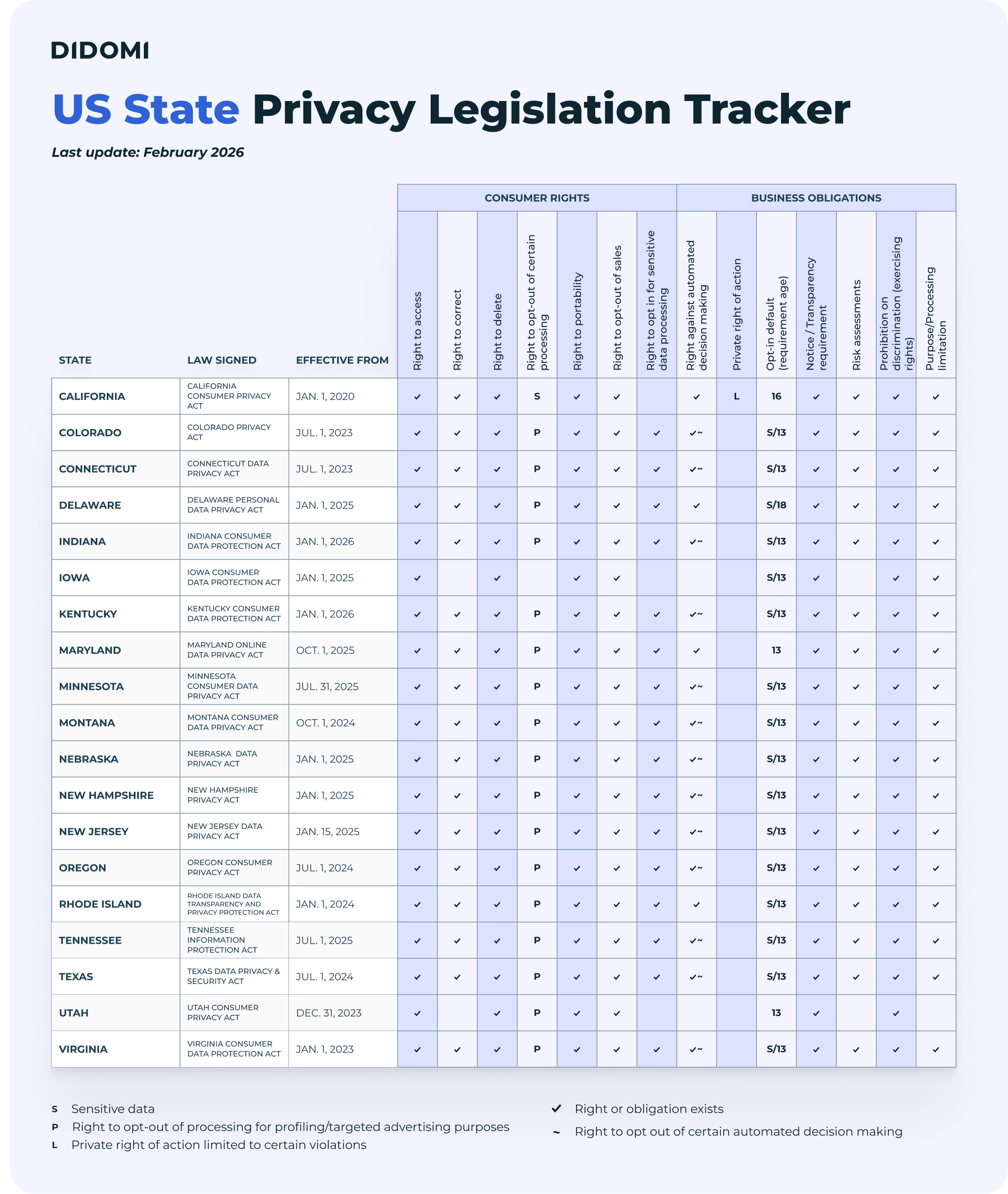
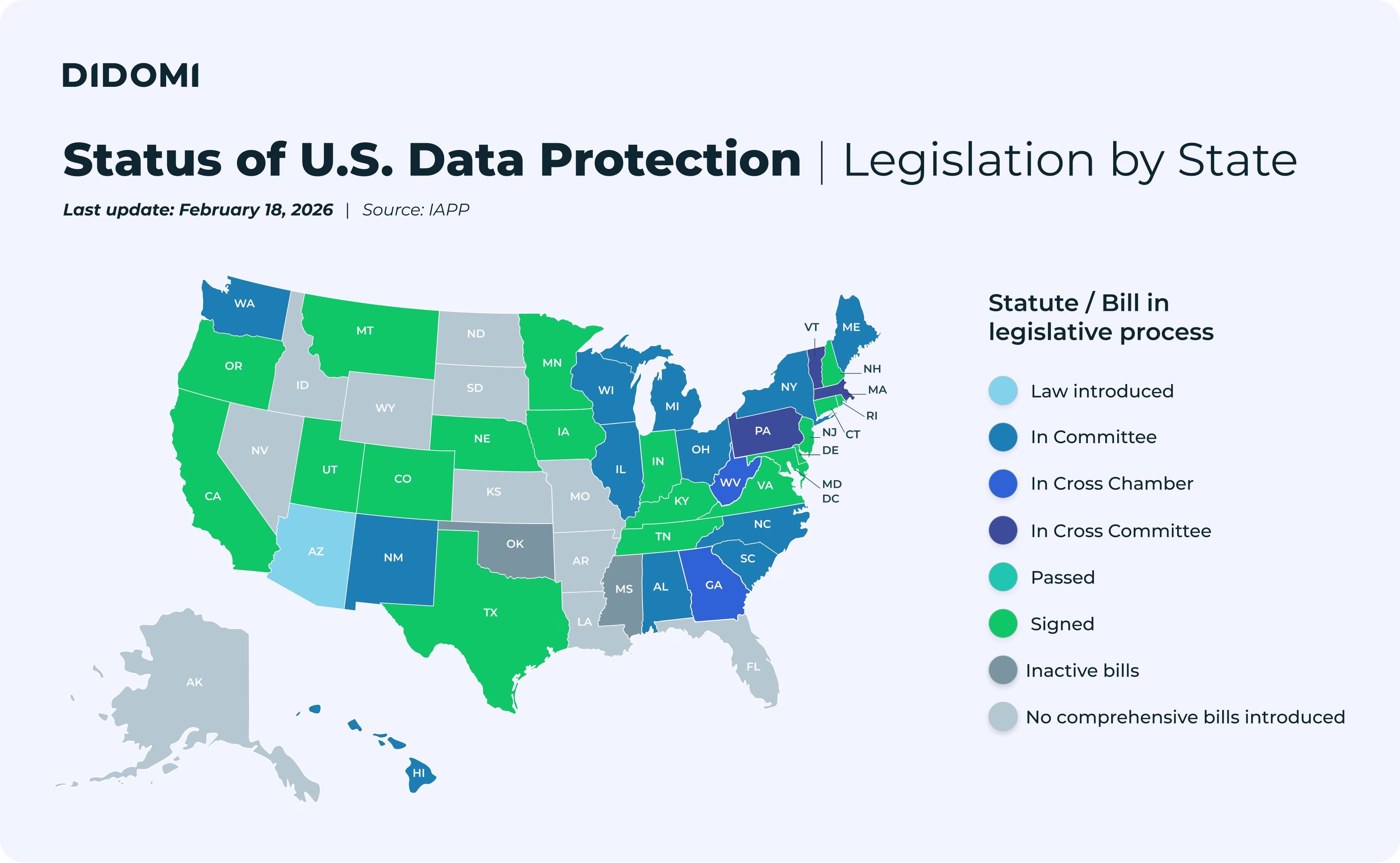
The compliance efforts that started with the GDPR have grown over the past eight years to include the CCPA, Law 25, the LGPD, and a growing list of regional laws and frameworks, creating a patchwork that evolves faster than most data infrastructures can keep up with.
For companies operating across markets, the result is data collected under one set of rules that sometimes can't legally be used under another, or records that don't meet the requirements of the jurisdiction where they're being processed.
Without the appropriate practices and solutions, compliant collection in one market becomes dead-end data in another.
2. Phasing out of third-party cookies
While third-party cookies were never a clean solution, they were a functional one that many organizations could rely on, and their deprecation has left a gap that most haven't fully closed.
Campaigns are still being planned, budgets are still being allocated, and attribution models are still running on signals that are either already gone or on their way out. The data exists, but the connective tissue that made it actionable is disappearing.
3. Stricter browser limitations
Safari's ITP and Firefox's tracking protections have been reshaping what's measurable, with a real impact on marketing teams that can’t reliably measure sessions, recognize return visitors, and analyze cross-site behaviors.
The visibility organizations have built their operations around has been narrowing for years.
4. Ad blockers
For publishers and content-driven businesses, ad blockers create blind spots in audience data, distorting the picture for everyone downstream.
Analytics, personalization, and monetization all operate on an incomplete view of actual user behavior, and most teams have no reliable way to know how incomplete that view really is.
How does dead-end data impact your business
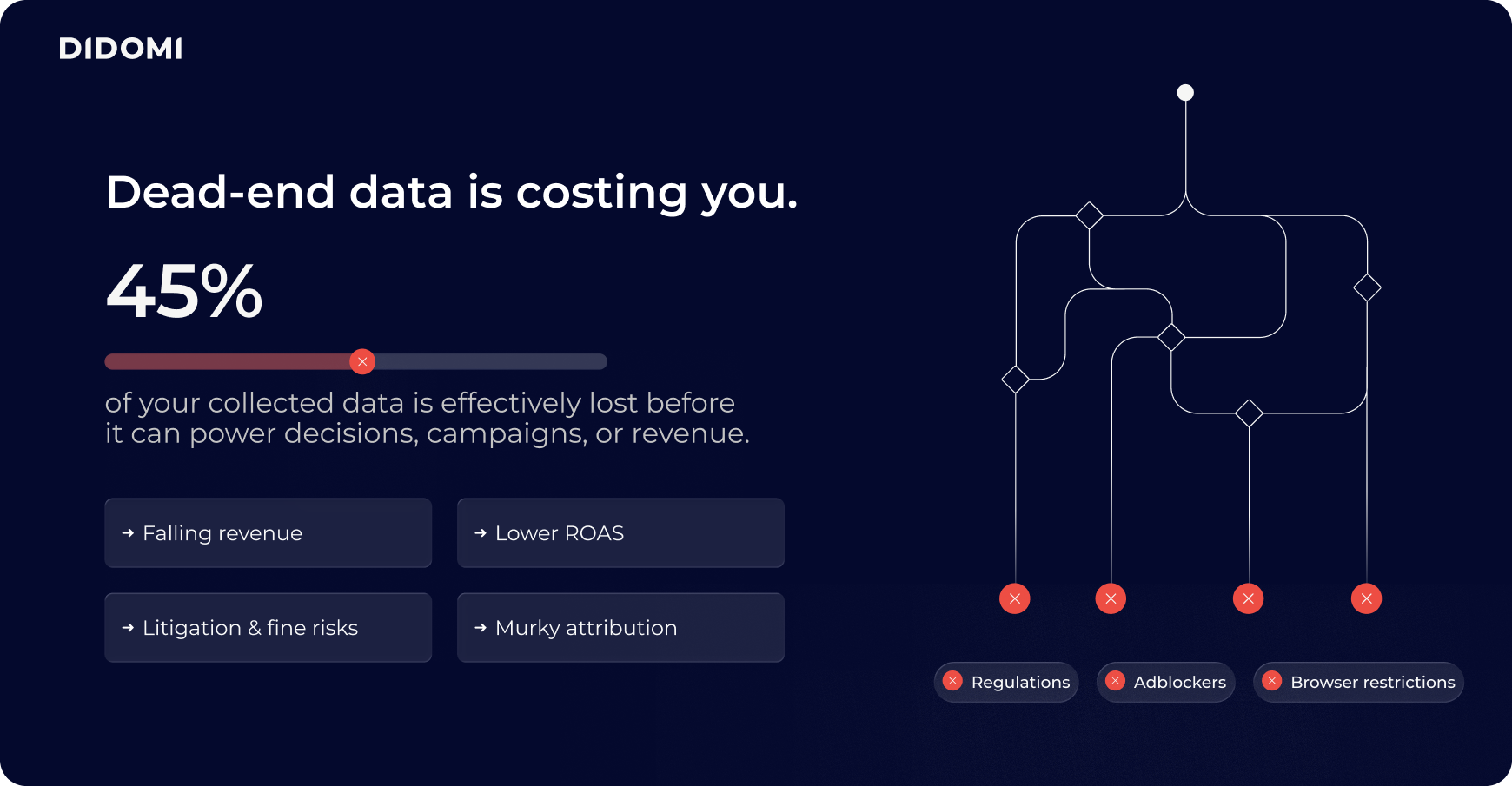
The effects of dead-end data are felt across functions, but they tend to surface in the same places.
Media spend becomes less efficient when the signals that inform targeting and attribution are degraded. With up to 70% of data volume lost along the way, campaigns are left optimizing toward available data rather than accurate data. Analytics and reporting become unreliable in ways that are hard to detect, as dead-end data produces numbers that look plausible, get reported upward, and shape decisions built on a flawed foundation.
Compliance exposure grows as data governance becomes harder to maintain across a fragmented ecosystem, and 75% of websites that use a CMP still face expensive compliance risks. The organizations most at risk are often those that don't yet realize how much of their infrastructure depends on signals they can no longer legally or technically use.
Perhaps most importantly, dead-end data erodes brands’ relationship with their customers. Data collected without clear consent, or handled in ways users wouldn't recognize or expect, becomes a liability that compounds over time.
Turn dead-end data into a competitive advantage. Opt for better.
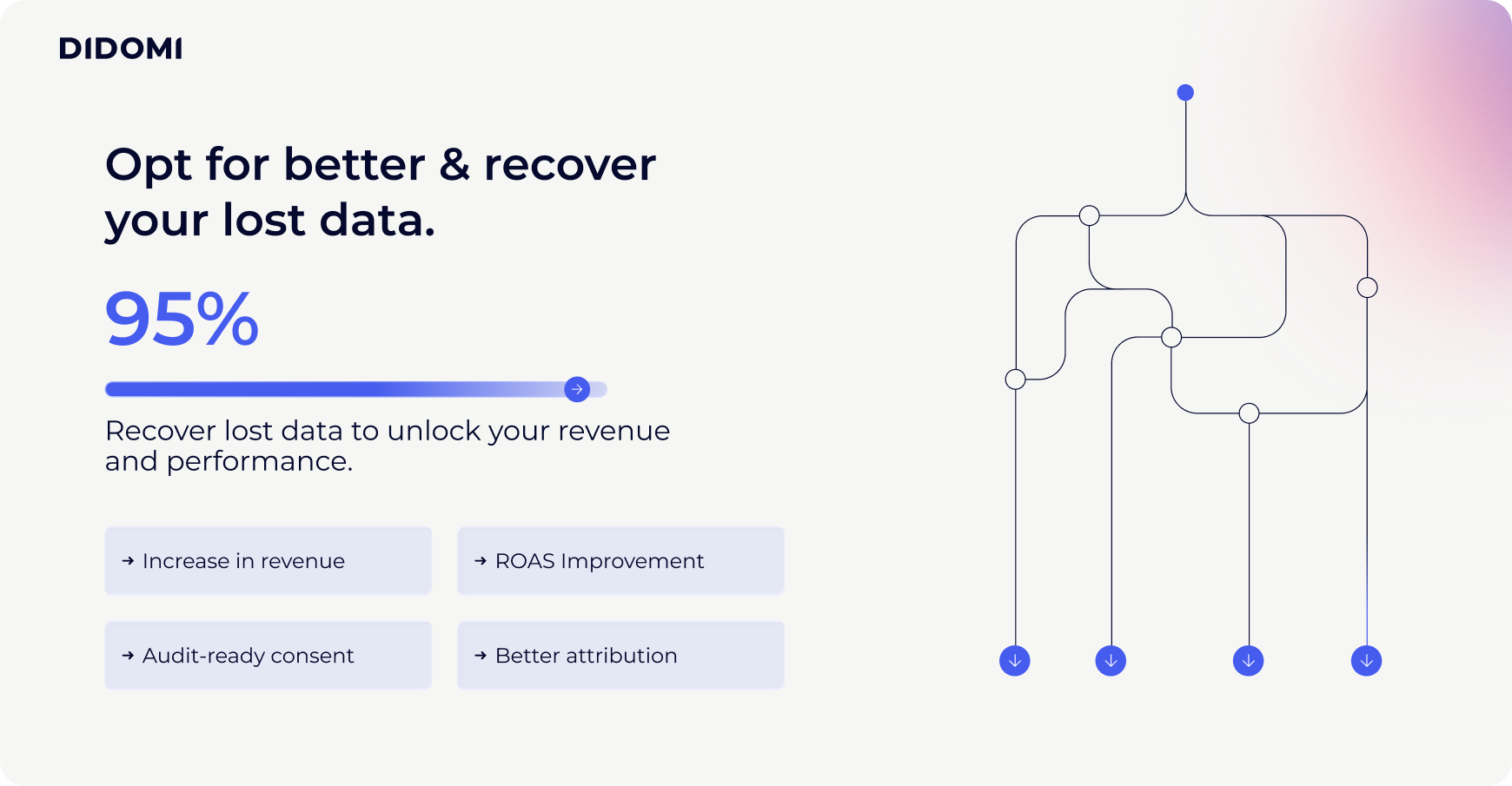
Dead-end data is what happens when organizations treat data collection as a technical problem and privacy as a legal one, managing each in isolation. The companies we work with that are moving past it are doing something simpler: building their data operations around what users have actually agreed to share.
Consented first-party data collected directly from users doesn't carry the fragility of the signals it's replacing, expire with a browser update, or get invalidated by a new regulatory framework. And because it's built on a real relationship with the user, it tends to perform better, too.
At Didomi, this is what we've been building toward. Learn more about this renewed vision on our blog, and hear about it directly from our CEO, Romain Gauthier:





.avif)