.svg)


If you collect user choices from a European audience via a consent banner, consent rate is one of the most important numbers to track and benchmark, as it directly impacts your ability to collect usable data for analytics, advertising, and personalization. But what does "good" actually look like across Europe?
What the data says
Based on data collected throughout 2025 and published in our January 2026 State of Data Privacy benchmark (our most comprehensive to date, covering hundreds of millions of consent interactions across European markets), here is what the numbers tell us:
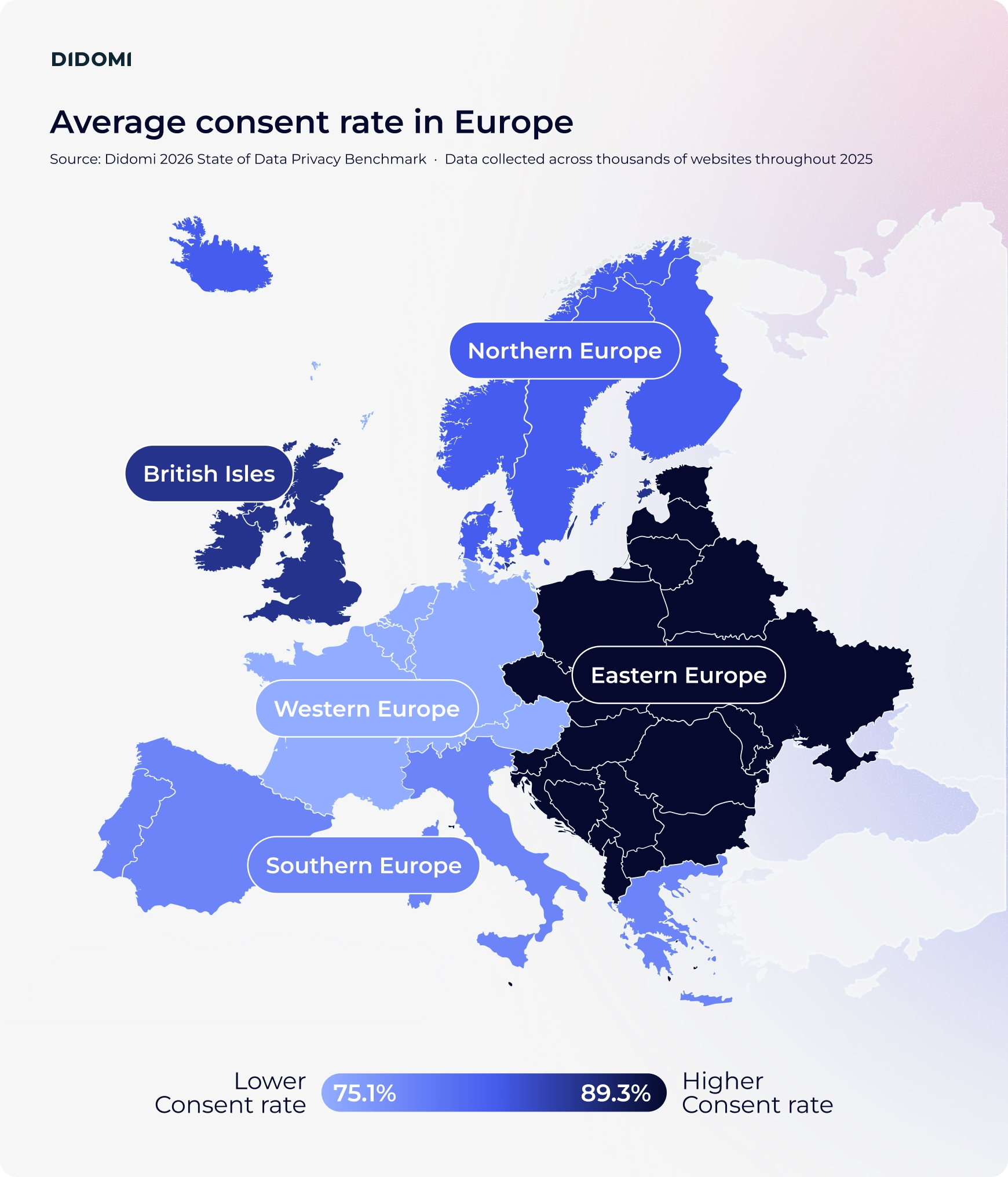
Consent rates across Europe in 2026 range from 75.1% to 89.3%, depending on the region, but the overall picture is one of relative stability. European consent rates have remained broadly consistent over the past four years, suggesting the market has reached a mature baseline.
Breaking it down by region:
- Eastern Europe leads with the highest consent rate at 89.3%
- The British Isles follow at 87.3%
- Northern Europe sits at 84.8%
- Southern Europe comes in at 82.5%
- Western Europe records the lowest consent rate at 75.1%, heavily influenced by France, which sits at 71%
The no-choice rate (users who neither accept nor refuse, and simply leave the banner unanswered) ranges from 21.7% to 27.4% across regions, while opt-in rates (the number of opt-ins over the total number of banners displayed)) range from 55.7% in Western Europe to 67.6% in Eastern Europe. For a full definition of these metrics, see our CMP metrics glossary.
What this means for you
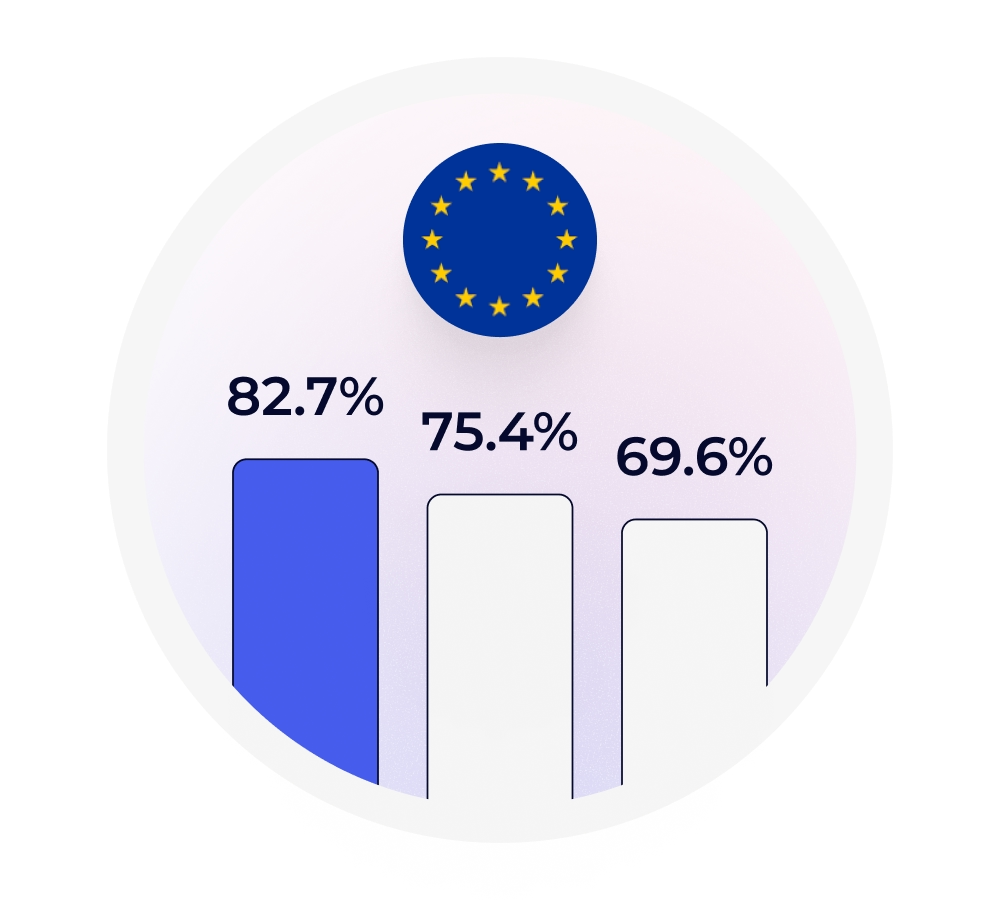
If your consent rate falls below the average for your region or industry (Media & Publishers lead at 82.7%, while Energy & Utilities sit at the lower end at 69.6%), you have meaningful room to improve through smart configuration choices: banner positioning, the clarity of your notice, how refusal options are presented, and more.
There are two things you should keep in mind as you work on improving your consent rate:
- Compliance is non-negotiable: While some configurations may correlate with higher consent rates in our data, they do not necessarily reflect sound privacy practice, and the two should never be traded off against each other. Always involve your legal team before making changes to your banner setup.
- Consent rates are shaped by a wide range of factors: Beyond banner design, factors that might influence your consent rate include your industry, audience, device, regulatory environment, and even cultural attitudes toward privacy. Benchmarking requires context, and a consent rate that looks low in isolation may be entirely normal for your market and sector.
Ultimately, the organizations that consistently perform well on both the performance and compliance fronts are those that treat privacy as a design principle rather than a constraint.
What's next for consent in Europe in 2026?
In 2026, the Digital Omnibus Package will keep many of us busy. With the trilogue underway, a lively battle of influence is already taking shape around some of the most delicate GDPR and ePrivacy topics.
For lawyers, it has a familiar taste, very much a 'pre-GDPR once again' moment, where legal expertise briefly becomes fashionable inside companies.
- Thomas Adhumeau, Chief Privacy Officer at Didomi
The Digital Omnibus GDPR simplification package proposed by the European Commissions and currently moving through EU lawmaking process, will likely be the biggest regulatory development to watch in European consent management in 2026. It has the potential to reshape how consent is collected and standardized across member states, and organizations should be closely monitoring how it develops.
Our team at Didomi is actively contributing to these discussions and will continue to publish updates as the legislative process moves forward.
More data about the state of privacy in Europe
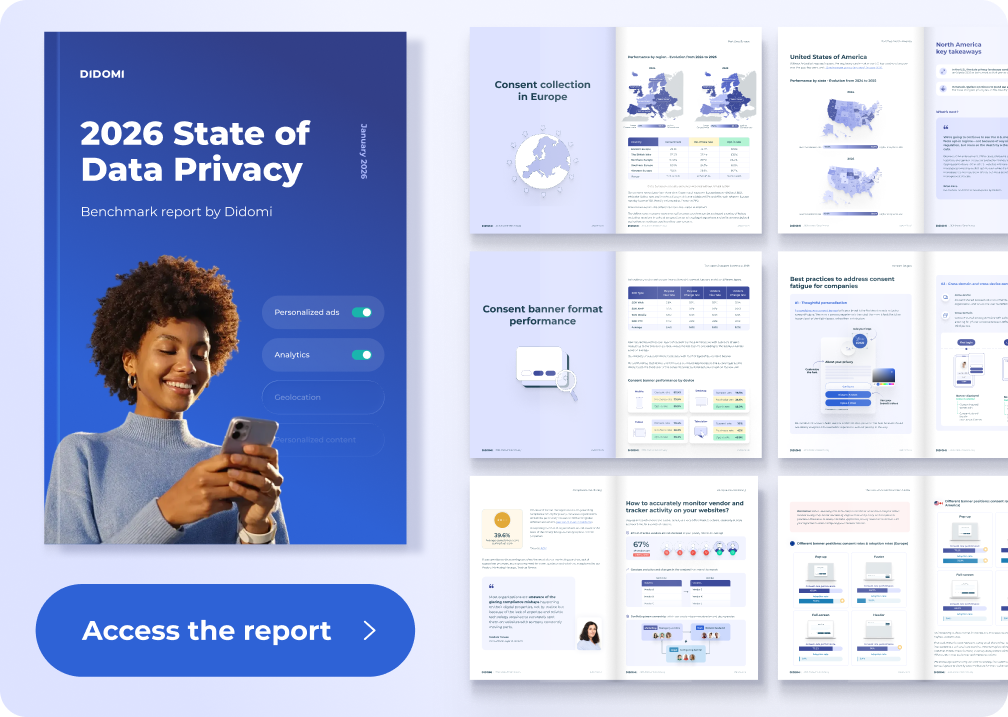
The regional breakdown is just one piece of a much larger dataset. Our 2026 State of Data Privacy benchmark covers consent collection across Europe and North America, consent banner format performance, compliance monitoring, AI, and more. Download the full report on our website: