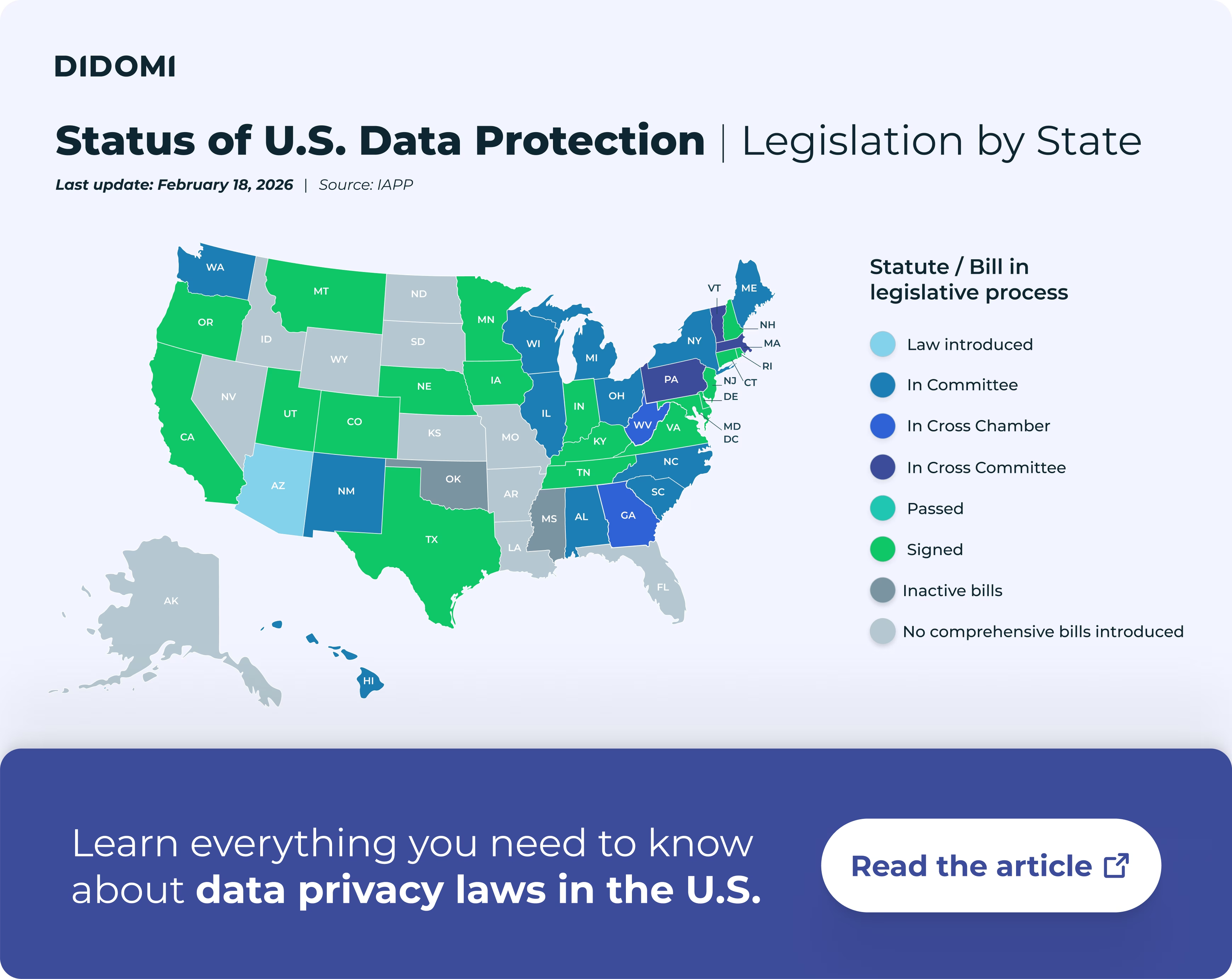
.svg)


Marketers previously relied on third-party cookies and external data providers to understand their audiences and target advertising campaigns. However, privacy regulations are becoming stricter, browsers are limiting cross-site tracking, and consumers expect transparency around how their personal information is used.
As a result, companies are rethinking their data strategies by increasingly focusing on first-party and zero-party data, collected directly from customers with valid consent and a transparent value exchange. This growing trend is creating an opportunity for brands to build stronger relationships with their audiences while maintaining a more accurate and sustainable marketing strategy.
In this article, we examine the current context for marketers, why first- and zero-party data are becoming an essential part of their strategies, and what tools they can use to start collecting and leveraging that data.
Why marketers can no longer rely on third-party data
Third-party data has been attractive to marketers because it provides scale. External data providers provide information from multiple sources and offer audience segments that brands can use for advertising and targeting. However, this presents several challenges.
- Companies often have limited visibility into how this data was originally collected, making it difficult to verify consent and ensure compliance with privacy regulations. This lack of transparency can create legal and reputational risks.
- Third-party data may suffer from inconsistent quality and accuracy, since it is collected across multiple platforms and intermediaries.
Even though Google reverted its plan to deprecate third-party cookies from its Chrome browser, the digital industry as a whole is increasingly cautious to overly rely on them, pushing organizations to move away from reliance on external data sources and toward sustainable data strategies built on direct relationships with their customers.
Our Chief Privacy Officer, Thomas Adhumeau, commented on this last year, at the time of Google’s announcement:
If the shift does not happen today, it will happen tomorrow. And maybe not because Google says so, but because Google might no longer be in charge.
If Chrome were ever to be spun off or placed under an independent foundation, a scenario that’s not entirely outlandish in a post-antitrust landscape, this decision could simply be delayed, awaiting the right governance to carry it out.
- Thomas Adhumeau, Chief Privacy Officer at Didomi (source: Google Chrome is keeping third-party cookies after all: What does it mean?, Didomi blog)
We established that the reliance on third-party cookies is likely unsustainable and that companies should seek better alternatives. Let’s look at zero- and first-party data.
What are first- and zero-party data?
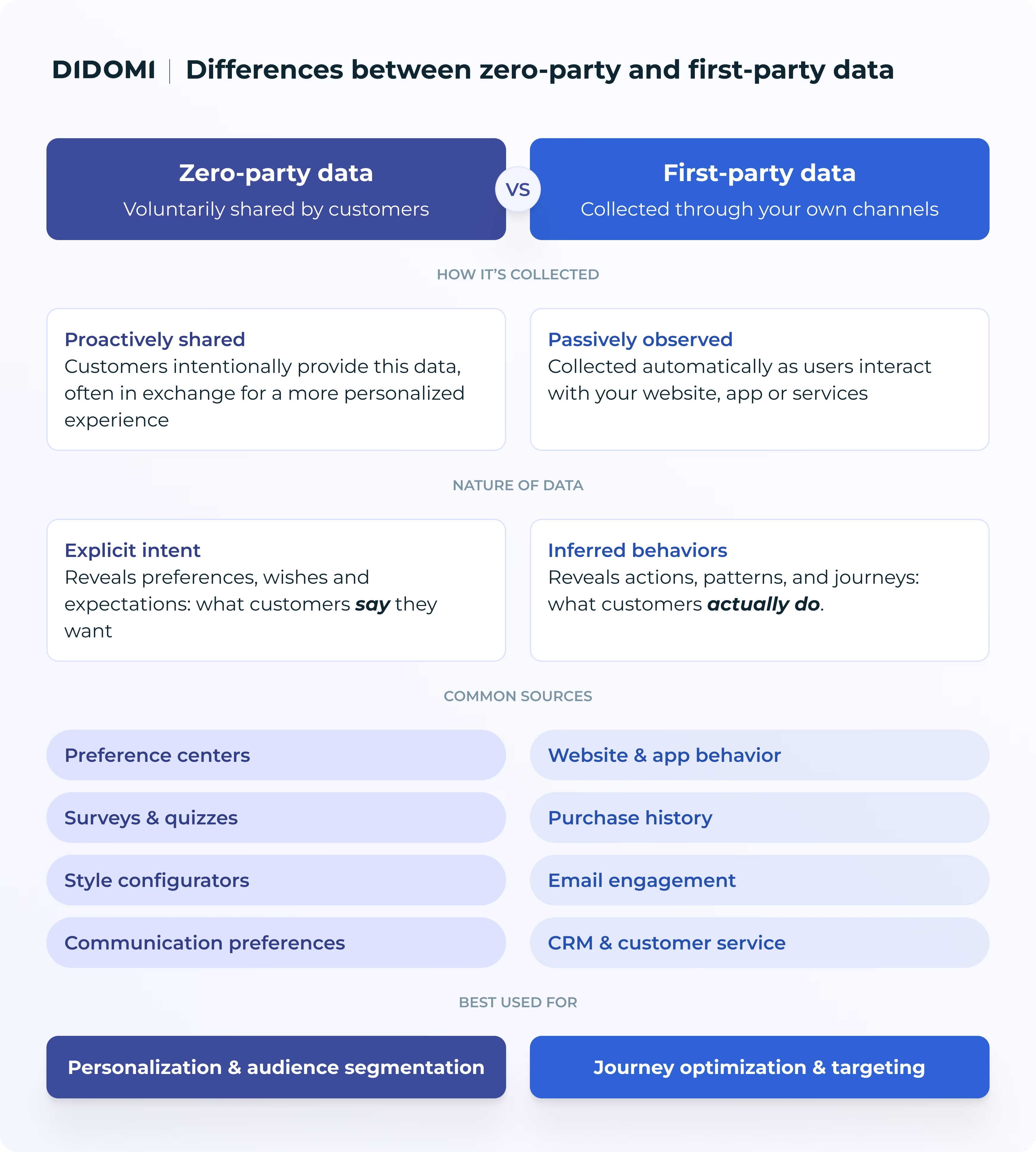
Two types of data are at the center of this shift, first- and zero-party data. While both are collected without relying on external data sources, they both differ in how they are obtained and what they reveal about your clients.
Understanding first-party data
First-party data refers to information that a company collects directly from users through its own channels and platforms. It tends to be more reliable, relevant, and up to date as it comes directly from client interactions, and allows companies to better understand how customers interact with their products, which content resonates most, and how users move through the purchasing journey.
Common sources of first-party data
- Website and mobile app behavior
- Purchase history and transaction data
- Customer accounts and CRM records
- Email engagement
- Customer service interactions
Benefits of first-party data
When properly collected and organized, first-party data provides valuable insights that help brands improve customer experiences, marketing campaigns, and make more informed business decisions.
First-party data cheat sheet
.avif)
Understanding zero-party data
While first-party data is based on observed user behavior, zero-party data is intentionally and proactively shared by customers themselves. In this case, users voluntarily provide information to a brand, often in exchange for a more personalized experience or more relevant recommendations. This data is explicitly shared, it offers particularly valuable insights into customer preferences, intentions, and expectations.
Common sources of zero-party data
- Preferences selected in a preference center
- Survey responses
- Product interest quizzes
- Communication preferences (topics, frequency, channels)
- Style or product configuration choices
Benefits of zero-party data
Unlike inferred data, zero-party data clearly reflects what clients say they want, making it useful for personalization and audience segmentation.
Zero-party data cheat sheet
.avif)
How about second- and third-party data?
Despite the importance of first- and zero-party data, a thorough marketing strategy should ensure a comprehensive approach including all types of customer data, always in accordance with applicable data privacy regulations.
Read our full guide about the different types of data for a complete breakdown of zero-, first-, second- and third-party data with examples, tips and use cases:
{{difference-zero-first-second-third-party-data}}
The business case for first- and zero-party data
As marketing evolves, first-party and zero-party data are becoming a critical part of modern data strategies, something that industry experts have echoed in our recent coverage of the most important data privacy trends to look out for this year, as well as our 2026 data privacy benchmark report:
Faced with the end of third-party cookies, rising acquisition costs, and ever-present profitability challenges, the verdict is clear: with their data, brands are sitting on an unexploited goldmine.
The key no longer lies in mere data collection, but in the intelligent activation of consented First-Party Data. It is imperative to break down silos between Technology, Legal, and Marketing to inject this qualified data directly into media platforms, enabling algorithms to optimize effectively. This paradigm shift transforms compliance into a pure performance driver. In this context, 2026 will undoubtedly be the year of the thoughtful and measured leveraging of proprietary data!
- Jonathan Dupasquier, Deputy CEO - M13H - part of Cosmo5 (source: 2026 data privacy trends: Predictions from the experts, Didomi blog)
There are numerous benefits to prioritizing zero- and first-party data in your marketing campaigns and initiatives, but we have identified four key areas that make it a critical opportunity for teams focused on profitability, trust, and compliance.
1) Building stronger customer trust
When companies clearly communicate how data is collected and give users meaningful control over their information, they create more transparent and respectful relationships.
In just one year, the percentage of consumers worried about data privacy and security jumped from 60% to 70% (source: Deloitte, 2025 Connected Consumer Survey), underscoring the urgency of building trust through transparent data practices, and leveraging these choices to shape compliant, tailored user experience:
Nothing undermines trust more than seeing one’s choices ignored. Real-time communication can significantly reduce this disconnect.
- Mathilde Arai, Head of Solution Consulting at Adobe (source: L’Usine Digitale)
The brands that get this right treat privacy choices as the start of a conversation. When customers feel heard, they are more likely to share more, engage more, and stay longer.
2) Supporting privacy-first marketing strategies
Privacy regulations, such as GDPR in Europe, CCPA in California or the Law 25 in Quebec, often require organizations to demonstrate lawful data collection practices and obtain clear user consent.
First-party and zero-party data naturally align with these requirements because they are collected through direct interactions and explicit user permission, making it easier for organizations to maintain compliance while still using data to enhance their marketing strategies.
This is as much a compliance issue as a brand question. Consumers are increasingly protective over their personal data, and a growing number are willing to stop buying from companies because of privacy concerns. But the flip side is equally true, as brands that get privacy right unlock a genuine competitive advantage:
In 2026, privacy will stop being a compliance layer and become a revenue architecture.
As signal loss accelerates and AI-driven systems demand cleaner inputs, companies will realize that consent is not a constraint; it’s the last reliable signal left.
The winners won’t be those collecting the most data, but those able to activate consented data consistently, at scale, across server-side, AI, and emerging channels. Privacy maturity will directly correlate with growth performance.
- Raphaël Boukris, Chief Revenue Officer and Co-founder at Didomi (source: Didomi 2026 Data Privacy Benchmark Report)
High-quality, consented first- and zero-party data is where that activation starts. By owning the relationship with your customers and understanding their explicit preferences, companies are able to collect signals that are cleaner, more actionable, and impossible for competitors to replicate.
3) Improving personalization accuracy
Only 20% of consumers say tech providers are "very clear" about what data they collect or how it's used (source: Deloitte, 2025 Connected Consumer Survey).
First- and zero-party data offer brands a more complete understanding of their audiences, allowing marketers to create experiences based on actual behavior and explicitly stated preferences, instead of relying on inferred audience segments from third-party providers:
Consent has been reduced to a banner that interrupts browsing, resulting in significant user fatigue. In reality, consent covers much broader choices, particularly regarding preferences and the relationship with the brand. (...)
Preference is at the heart of customer relations. It is declarative data, much more qualitative than inferred signals.
- Romain Gauthier, CEO and co-founder at Didomi (source: L’Usine Digitale)
This observation is at the heart of the native integration between Didomi and Adobe Experience Cloud, which allows businesses to stream user consent and preference data in real time to stay compliant, eliminate data silos, and ensure continuous updates of customer profiles and marketing workflows:
.png)
4) Driving better marketing performance
First- and zero-party data also translates directly into marketing performance. Higher-quality, consented data feeds better signals into media platforms and marketing algorithms, leading to more efficient campaigns and stronger returns.
This is exactly what Mediahuis, a European media group operating across Belgium, the Netherlands, Ireland, Germany, and Luxembourg, experienced after adopting Didomi's PMP as part of their personalization strategy. By leveraging user preferences to improve ad targeting, they were able to achieve measurable improvements in ad targeting performance and revenue:
How to start collecting and activating first- and zero-party data
The transition away from third-party data means focusing on higher-quality data collected with transparency and trust. Companies that succeed in this new context stop guessing what customers want and start asking them directly.
Our Preference Management Platform (PMP) makes this possible by unifying consent and preferences in one place, across every channel, empowering companies to:
- Create clear value exchanges: Give customers control over their own communication preferences and turn privacy into a trust-building brand experience
- Stay compliant: Track consent history, monitor analytics, and report on compliance across web, app, and offline touchpoints
- Activate data across their marketing stack: Connect natively with CRM and marketing automation tools, with no guesswork and no manual syncing
- Build richer customer profiles: Collect zero- and first-party data directly through branded, user-friendly preference centers
Brands that adopt these practices will be able to remain compliant with evolving privacy regulations, deliver more personalized customer experiences, and turn privacy into a competitive advantage.
To discover how we can help with your zero-and first-party data strategy, book a time with one of our data privacy experts or learn more about our Preference Management Platform at your own pace:
{{discover-our-preference-management-platform}}
Frequently asked questions (FAQ)
What is the difference between zero-, first-, second-, and third-party data?
Zero-party data is information customers share proactively, such as preferences or survey responses. First-party data is collected directly from their behavior on your platforms. Second-party data is first-party data shared between trusted partners, while third-party data is purchased from external providers with limited visibility into how it was originally collected.
To go into more details, read our full breakdown of all four data types.
Is consent required for zero- and first-party data?
It depends on the type of data and how it is used. Zero-party data is shared voluntarily, but that does not automatically satisfy consent requirements under regulations like the GDPR or the CCPA. First-party data collected through behavioral tracking may also require consent depending on the channel and jurisdiction.
When in doubt, collecting explicit consent is always the safest and most trust-building approach.
How can I leverage first- and zero-party data in my marketing tools?
The key is connecting consent and preference data directly to your existing marketing stack. Tools like Didomi's Preference Management Platform integrate natively with CRM and marketing automation platforms, allowing you to activate consented data in real time without manual syncing. Learn more about how the Didomi PMP works.
What is a preference center, and why does it matter?
A preference center is a branded interface where customers can control what data they share and how they want to be contacted. It is one of the most effective ways to collect zero-party data while building trust, since it gives users transparency and control over their experience.
Why is third-party data becoming less reliable?
Third-party data is collected across multiple platforms and intermediaries, making it difficult to verify consent or guarantee accuracy. Beyond quality concerns, the broader industry is moving away from reliance on it as privacy regulations tighten and browsers limit cross-site tracking.
Read more about Google's latest third-party cookie decision and what it means for marketers.
What is the difference between a CDP and a PMP?
A Customer Data Platform (CDP) aggregates data from across your entire tech stack to build unified customer profiles.
A Preference Management Platform (PMP) focuses on collecting, centralizing, and distributing user consent and preferences, enabling data to be legally activated across your marketing tools.
Rather than competing, the two are complementary: the PMP ensures your data is consented and compliant, while the CDP puts it to work. Read our full comparison.



.png)