.svg)




If you manage a website that collects consent under GDPR, your banner format is one of the earliest design decisions you make, and one of the most consequential. But how much does format actually affect the consent rate you see? And does the highest-performing option necessarily reflect sound privacy practice?
The honest answer, backed by data collected throughout 2025, is that it depends. Let's look at the data to understand why.
What the data says
For our annual benchmark, we tracked four widely deployed consent banner formats across European websites, measuring both consent rate performance (the share of opt-ins among users who made a choice) and adoption rate (how frequently each format appears in practice). For a full definition of these and related metrics, see our CMP metrics glossary.
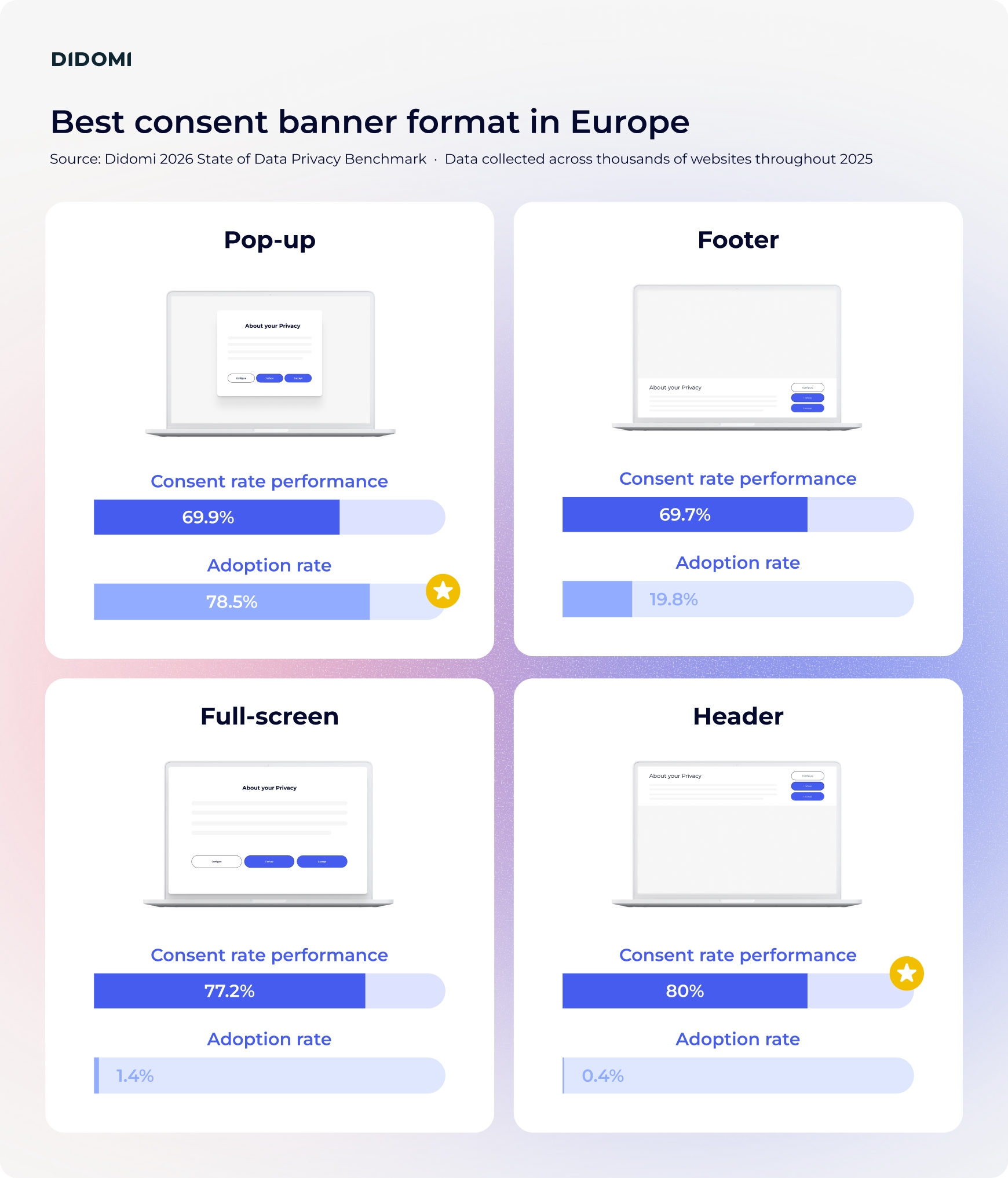
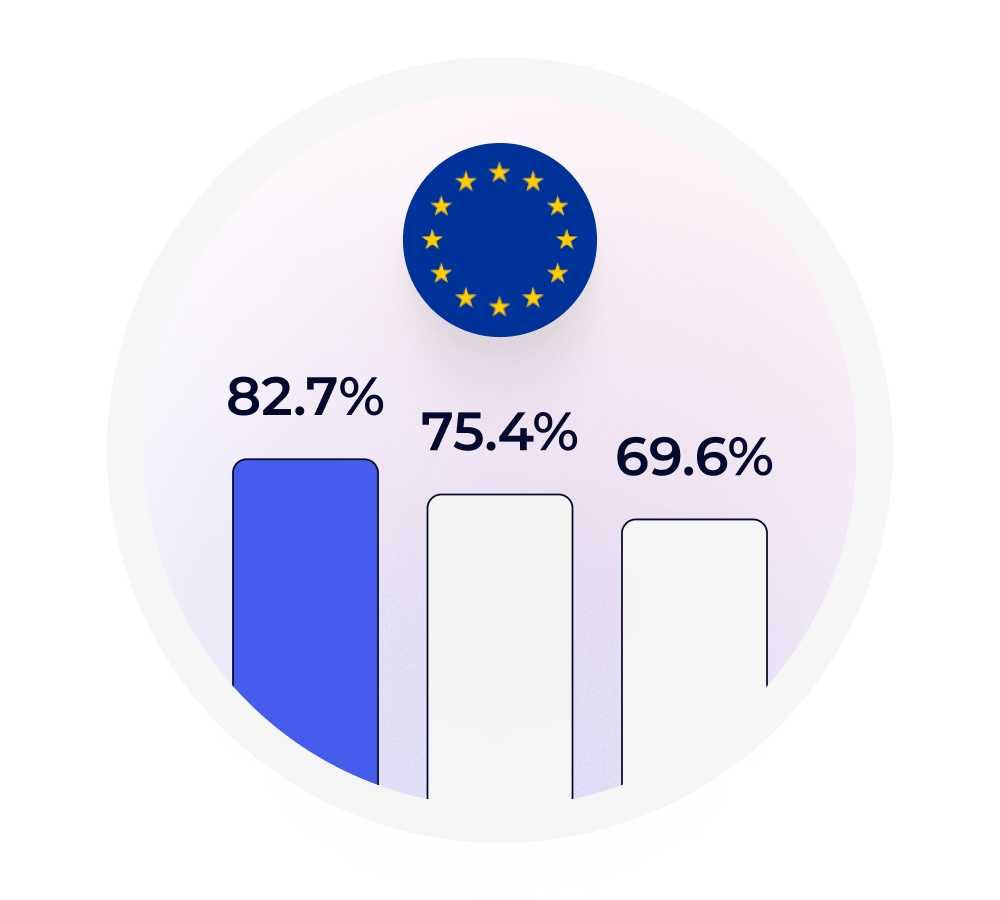
The results reveal a consistent tension, as the formats associated with the highest consent rates are also the least used across the market.
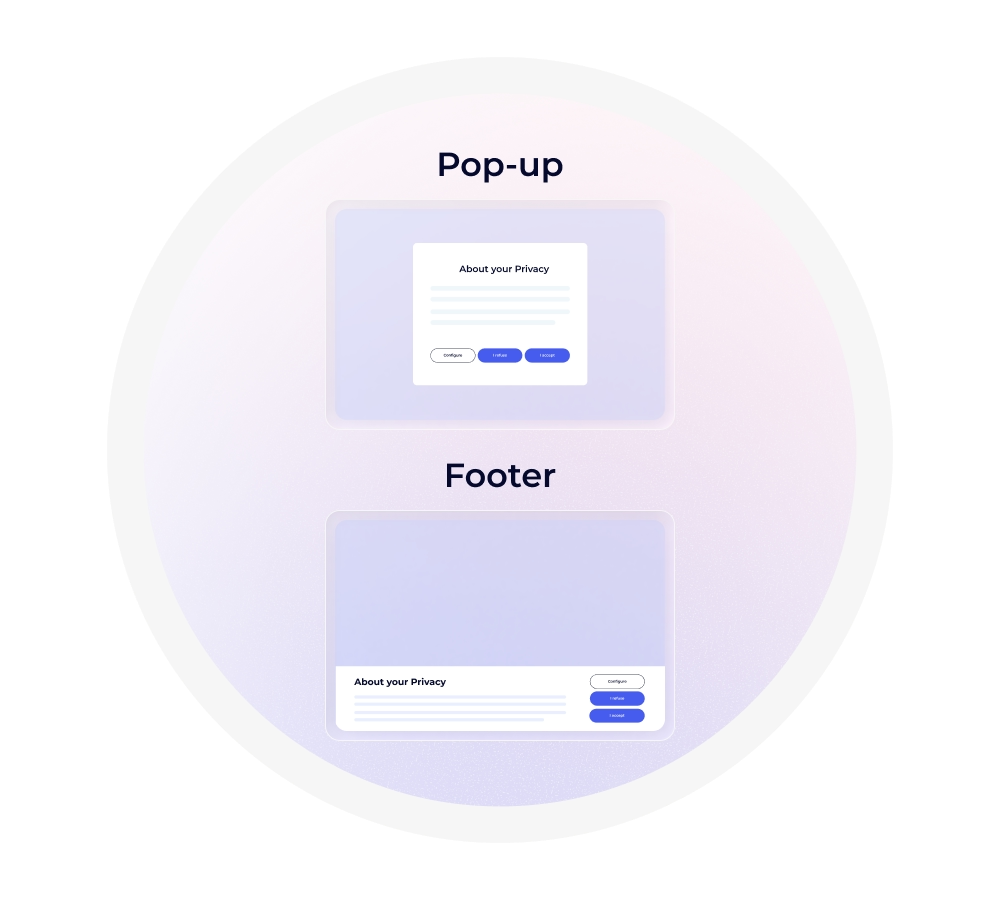
- Pop-up (78.5% adoption, 69.9% consent rate): The dominant format by a wide margin, nearly four times more common than the next most adopted option. Its consent rate sits close to the European average, and its familiarity to users likely contributes to stable, predictable performance. For most organizations, it remains the safe default.
- Footer (19.8% adoption, 69.7% consent rate): The second most common format. It appears at the bottom of the screen without blocking page access, and its consent rate nearly matches the pop-up. Its non-intrusive placement may also mean some users never see it at all, which can contribute to a higher no-choice rate.
- Full-screen (1.4% adoption, 77.2% consent rate): A significantly higher consent rate than either of the dominant formats, but used in only a small fraction of implementations. The gap between performance and adoption likely reflects concerns about user experience and the risk of being perceived as coercive by regulators.
- Header (0.4% adoption, 80% consent rate): The highest consent rate in the dataset, yet the rarest format in practice. Non-blocking, like the footer, but positioned at the top of the screen, which may explain the stronger performance without the intrusive footprint of a full-screen takeover.
Taken together, these numbers suggest that market adoption is shaped by more than performance alone. Familiarity, regulatory risk, and user experience all factor into how organizations choose their banner format in practice.
What this means for you
If your consent rate falls below the European average for your organization's banner format, the data above may point to levers worth exploring, but the picture is more nuanced than a simple performance ranking suggests.
The pop-up's near-universal adoption (78.5%) reflects a market consensus built on reliability and predictability. The header's 80% consent rate is striking, but its 0.4% adoption rate is itself a signal that organizations are not simply optimizing for the highest number. Two important caveats apply here:
- Compliance is non-negotiable: Some banner formats may correlate with higher consent rates in our data, but that does not mean they reflect sound privacy practice. Formats and design choices perceived as coercive or that limit genuine user choice may attract regulatory scrutiny regardless of their consent rate performance. Always involve your legal team before changing your banner configuration.
- Consent rate is shaped by far more than format alone: Your industry, audience demographics, device mix, regulatory environment, and the specific wording and design of your banner all play significant roles. A format that performs well for a media publisher may not be appropriate for a healthcare or financial services organization. Benchmarking requires context.
Ultimately, the organizations that consistently perform well on both the performance and compliance fronts are those that treat privacy as a design principle rather than a constraint.
What's next for consent banner design in 2026?
2026 is shaping up to be a significant year for how consent is collected, verified, and governed across digital environments.
With meaningful enforcement of universal opt-outs finally arriving in U.S. browsers, we may see the long-standing divide between U.S. and European privacy expectations begin to narrow.
As new consent channels mature (from mobile to CTV to server-side), the entire ecosystem will be pushed to rethink how permissioned data is tracked and governed. Knowing exactly when, where, why, and how consent was gathered will shift from an operational detail to a strategic advantage. This clarity becomes essential as the industry moves into server-side execution and AI-driven interactions, where user choices must be consistent, transparent, and verifiable across every touchpoint.
- Jeff Wheeler, VP of Product, Didomi
The trends described by our VP of Product are already visible in adoption data. Server-side tagging is growing as organizations look for more reliable ways to honor consent signals downstream, and frameworks like the IAB's TCF and Google Consent Mode are becoming baseline expectations rather than optional add-ons.
Our team is actively monitoring these developments and will continue publishing data and analysis as the context and industry evolve.
More data about the state of data privacy in 2026
Banner format performance is just one dimension of a much larger dataset.
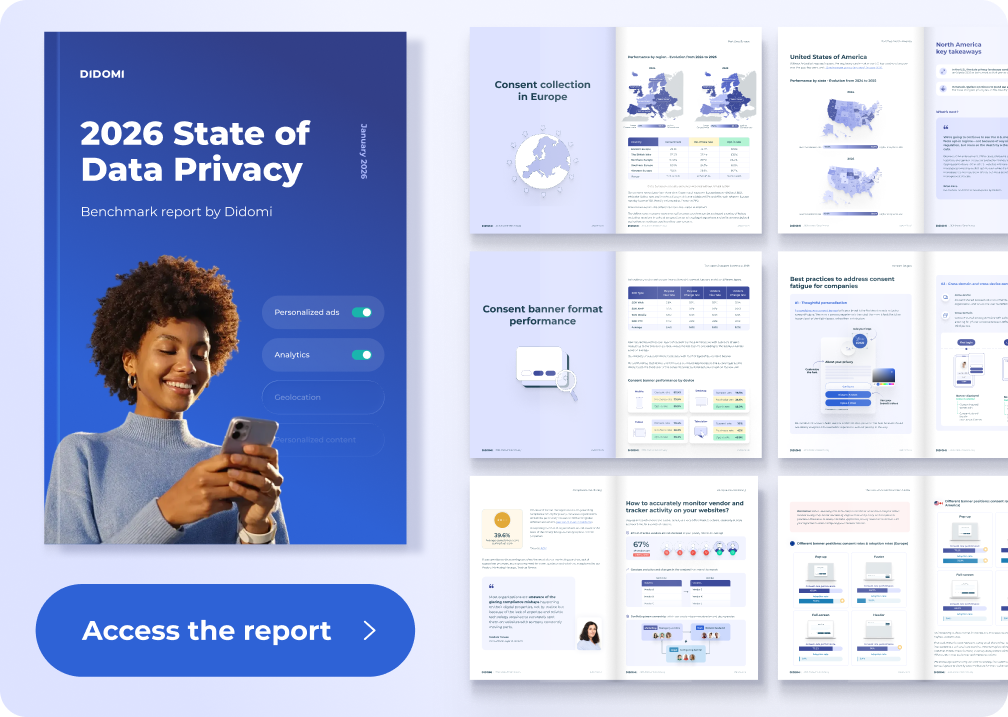
Our 2026 State of Data Privacy benchmark covers consent collection across Europe and North America, regional and industry breakdowns, the impact of refusal options on consent rates, compliance monitoring, artificial intelligence, and more. Get your copy on our website: