.svg)




Your website is never fully static. Vendors update their scripts, new tags are added outside the normal review process, and trackers start firing before consent is collected... Each of these scenarios creates regulatory exposure, and none of them is visible without scanning.
Website compliance monitoring provides a documented record of which trackers are present, which vendors collect data, and whether that collection aligns with what users have actually consented to.
The challenge is that compliance needs vary widely. A large publisher operating across multiple domains globally has different requirements than a small team conducting a routine check on a single page. Choosing the right scanning tool starts with understanding what each one is built for.
The different types of compliance scans, compared
Didomi offers three tools to cover these scenarios: XL Scan, Advanced Compliance Monitoring (ACM), and a free tracker and vendor scan. Here's how they compare.
XL Scan, for the full picture at once
Imagine you're a privacy manager at a large media group. Your website has thousands of pages across editorial, commercial, and subscription sections, managed by different teams and built on different stacks. You've just selected a new CMP and need to establish a reliable baseline before going live. A spot check on a handful of pages won't be enough.
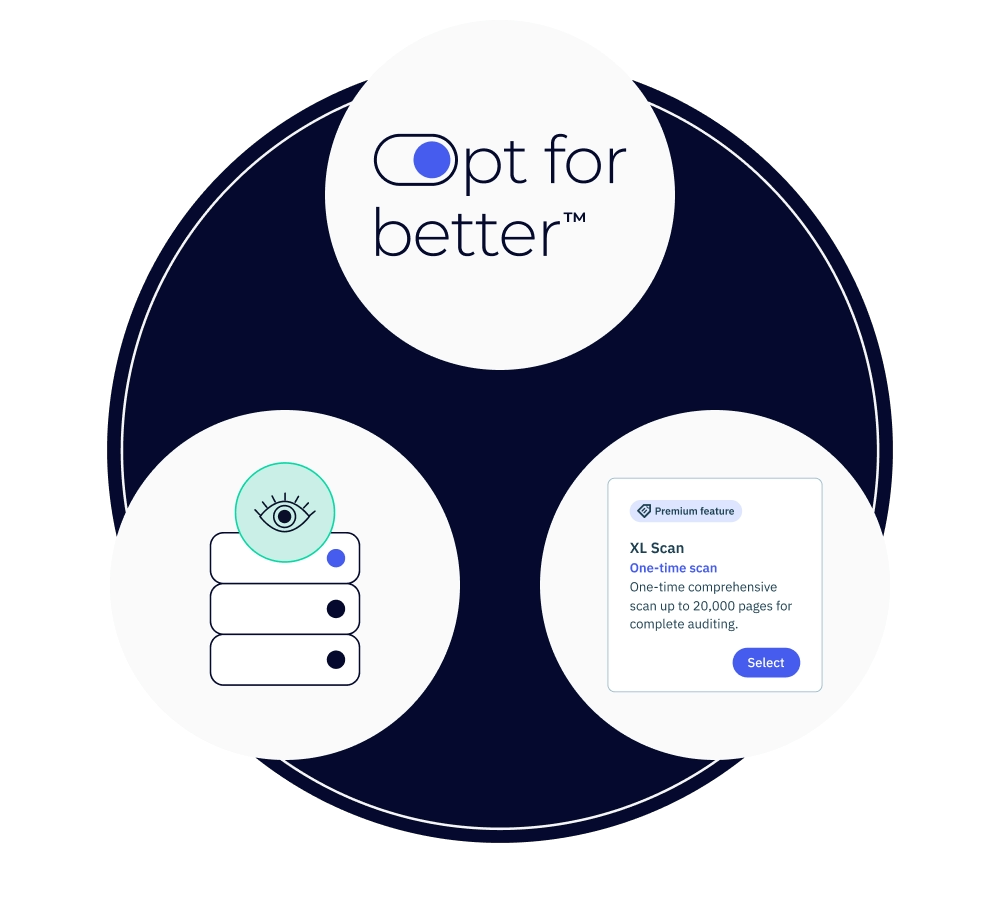
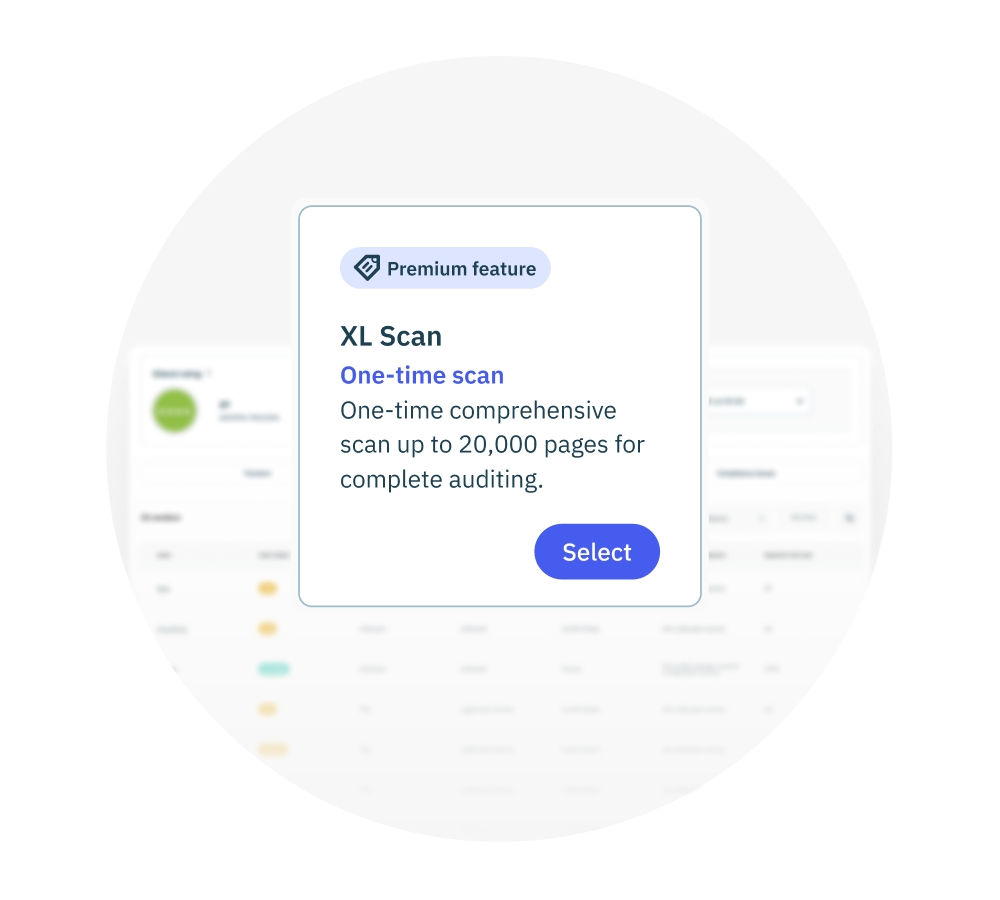
That's where XL Scan fits. It's a one-shot scanning option that covers up to 20,000 pages in a single run, either by auto-detecting available pages or by uploading a custom URL list. From there, you can validate your page selection, configure scanning behavior (user actions, tracker acceptance or refusal), and launch.

XL Scan is the right tool when you're migrating to a new CMP and need the most representative audit available, preparing for or responding to an external audit, conducting a risk assessment after a compliance concern has been raised, or managing a large website with many sections and multiple product or IT owners. Full analytics are available when combined with ACM.
Advanced Compliance Monitoring (ACM), for continuous oversight and regression detection
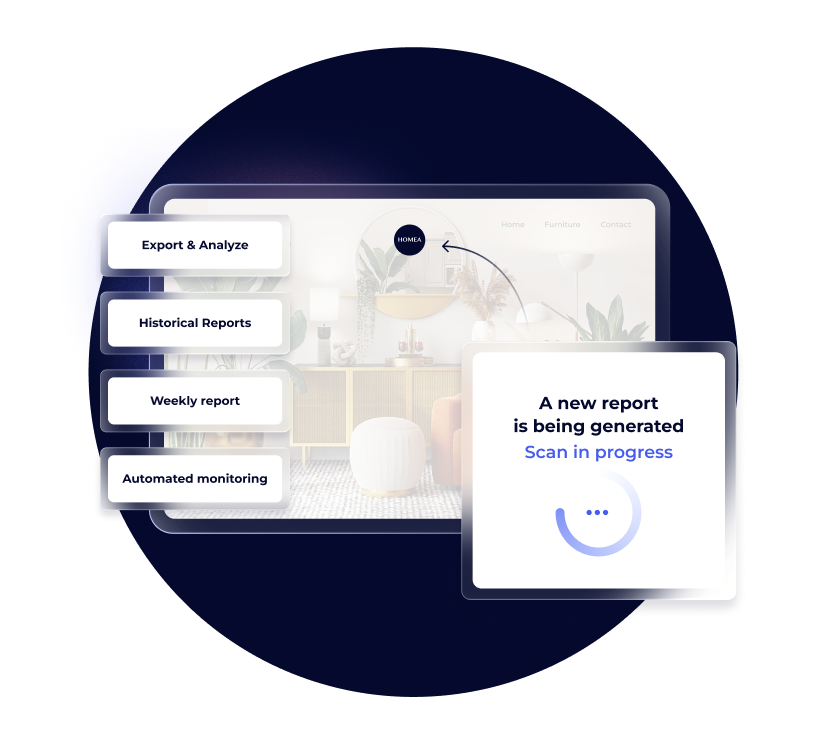
ACM is built for ongoing monitoring, not point-in-time snapshots. Consider a scenario where your development team pushes an update on a Friday afternoon. A tracker that had been correctly gated behind consent starts firing unconditionally. Without scheduled scanning, that regression could go undetected for days or weeks.
.avif)
ACM can be scheduled as frequently as hourly, making it ideal for detecting regressions. For example, detecting a tracker that starts firing before consent following a site update. It supports up to 150 pages per scan and offers three customizable compliance scenarios, giving your team more flexibility to test different user journeys. It also leverages AI for maximum efficiency.
ACM is the right choice when compliance is an ongoing operational priority, if you need to catch regressions quickly, track vendor behavior over time, or monitor across multiple domains and regions.
{{acm-start-monitoring-today}}
Tracker and vendor scan, for a starting point and targeted checks
Our free tracker and vendor scan is a lightweight option built into the Didomi CMP. It detects the trackers and vendors present on your site so you can identify what needs to be added to your CMP configuration. It runs monthly and covers a handful of pages at a time.

Think of it as a discovery tool rather than an audit tool. It's well-suited for an initial setup, or for checking specific pages to surface any vendors you may have missed.
Choosing the right type of compliance scan
The right scanning approach depends on your website's size, your compliance maturity, and how frequently your tracking setup changes.
- XL Scan is for one-time, large-scale audits, ideal for CMP migrations, risk responses, and periodic deep reviews.
- Advanced Compliance Monitoring (ACM) is the operational backbone for teams that need continuous visibility and fast regression detection.
- The free tracker and vendor scan is a good entry point for targeted checks on a handful of key pages.
As privacy enforcement intensifies across jurisdictions, accurate, well-documented visibility into tracker and vendor behavior is becoming both a legal expectation and an operational standard. Knowing what's on your website is essential, but implementing reliable monitoring at scale is what separates reactive from proactive organizations.
{{talk-to-an-expert}}